Glasgow Hair Transplant Clinics
Before | After
Case study
3 PRP sessions
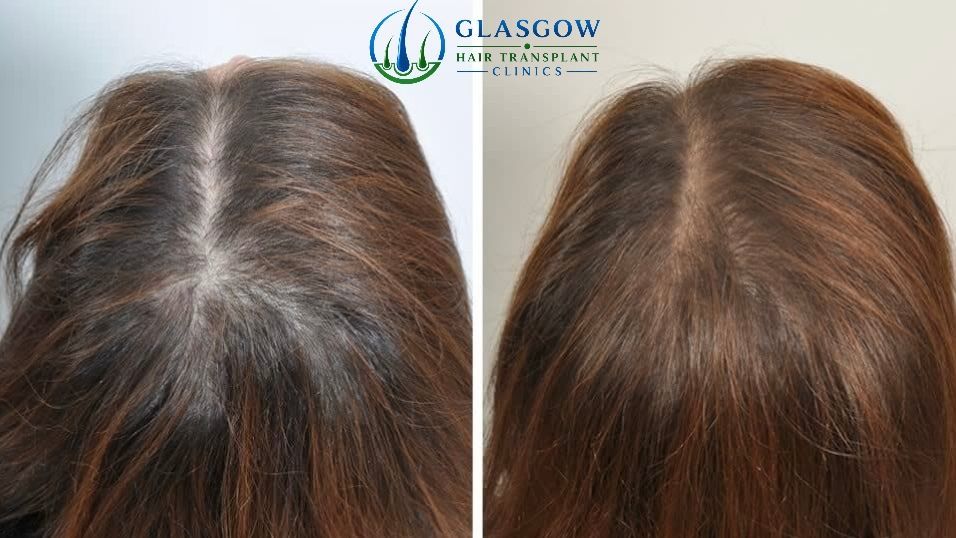

PRP is a non-surgical option for some men and women with pattern hair loss. It may improve hair density, but the response depends on the cause of thinning and is not guaranteed.
Dr Harpreet Kalra assesses the pattern of thinning and creates a treatment plan built around the areas where stronger density and growth are required.
Book a Free Consultation



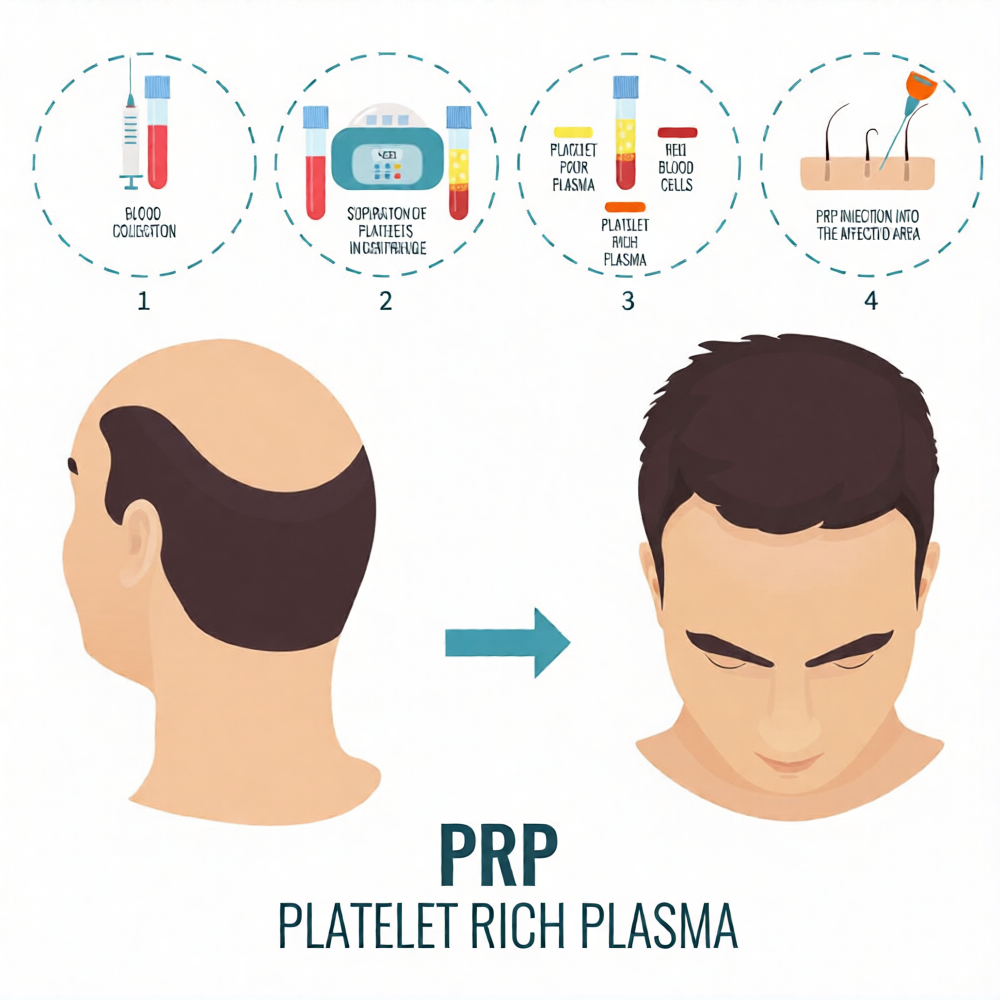
Platelet-rich plasma therapy uses the healing and growth factors already present in your blood. A small blood sample is processed in a centrifuge, creating a concentrated plasma preparation that is injected through the areas affected by thinning.
PRP is used for pattern hair loss where thinning hair remains. A widening parting, crown thinning or receding hairline needs an assessment first: similar changes can have different causes.
PRP does not require incisions, stitches or donor-hair removal. Patients leave the clinic after treatment and return to their normal routine with minimal interruption.
It can be booked as a standalone course or combined with FUE, DHI or FUT surgery.
Case study
3 PRP sessions
A small blood sample is taken from your arm and placed into a centrifuge. The spinning process separates the platelet-rich plasma from the red blood cells, leaving a concentrated preparation ready for treatment.
The preparation method affects the PRP sample. A higher platelet count on its own does not establish that a treatment will produce better hair growth.
The prepared PRP is injected across the thinning area at carefully controlled depths. Placement matters: the depth, spacing and distribution determine how evenly the treatment reaches the follicles.
PRP preparation and injection methods differ between studies and clinics. The assessment should explain the proposed course, its limitations and how progress will be reviewed.
PRP may be considered for men and women with pattern hair loss and remaining thinning hair. Sudden shedding, patchy loss or scalp symptoms need a diagnosis before a treatment course is chosen.
PRP is sometimes offered alongside hair transplant surgery. It should not be presented as a guarantee against post-operative shedding.
PRP does not transplant new follicles into a bald area. Dr Kalra can assess whether medication, surgery, PRP or monitoring is appropriate for the cause and extent of your hair loss.
Because PRP uses the patient’s own blood, the same treatment principle works across both male and female pattern hair loss. The injection plan is adjusted to match the pattern, density and size of the thinning area.
Case study
5 PRP sessions
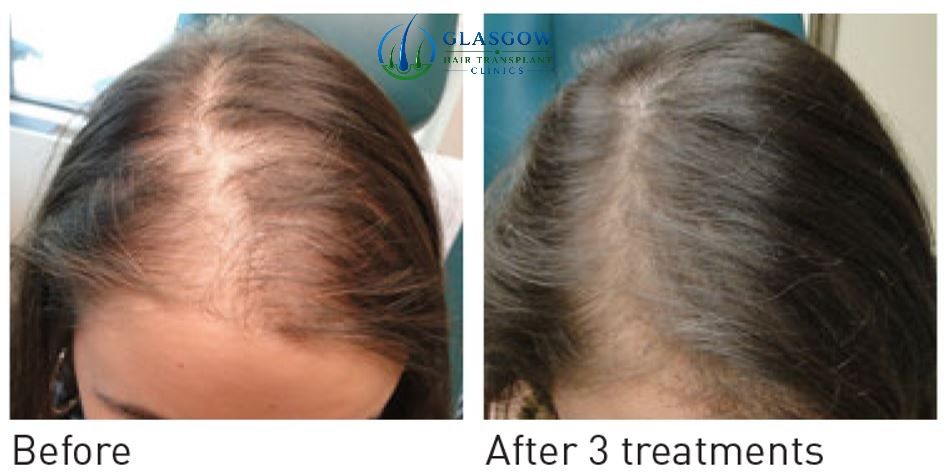
Your appointment begins with a review of the areas being treated and progress photographs where required. A small blood sample is then taken from the arm and immediately processed inside the clinic.
Blood preparation: the sample is placed into the centrifuge, separating and concentrating the platelet-rich plasma. The prepared PRP is collected into sterile syringes for treatment.
Scalp treatment: injections are placed throughout the thinning area using a consistent pattern. The aim is complete coverage rather than concentrating the plasma into only a few points.
After treatment: the scalp is checked and you leave the clinic immediately. A complete appointment normally takes between 45 and 90 minutes, making PRP straightforward to fit around work and daily commitments.
An initial course may involve 3–6 treatments spaced 4–6 weeks apart. The number and timing should be agreed after assessment and reviewed against your response.
The first three months: some patients notice less shedding. Others may see little change at this stage.
Between three and six months: compare photographs taken in the same lighting and position to assess any change in coverage. An improvement cannot be promised by a fixed date.
After the initial course: maintenance appointments may be discussed if treatment has helped. Further sessions should depend on the response, costs and agreed treatment plan.
PRP usually involves repeat appointments. Review the photographs and your experience before committing to further sessions, particularly if the initial course has produced little benefit.
The package includes three complete appointments with blood collection, centrifuge processing, high-concentration PRP preparation and targeted scalp injections.
Discuss the proposed number of appointments and any maintenance costs before booking. The three-session package price does not mean that every patient needs the same course.
Patients who require a longer 4–6 session course receive a clear schedule based on the size of the treatment area and the response recorded during the initial appointments.
Book a PRP ConsultationCase study
4 PRP sessions
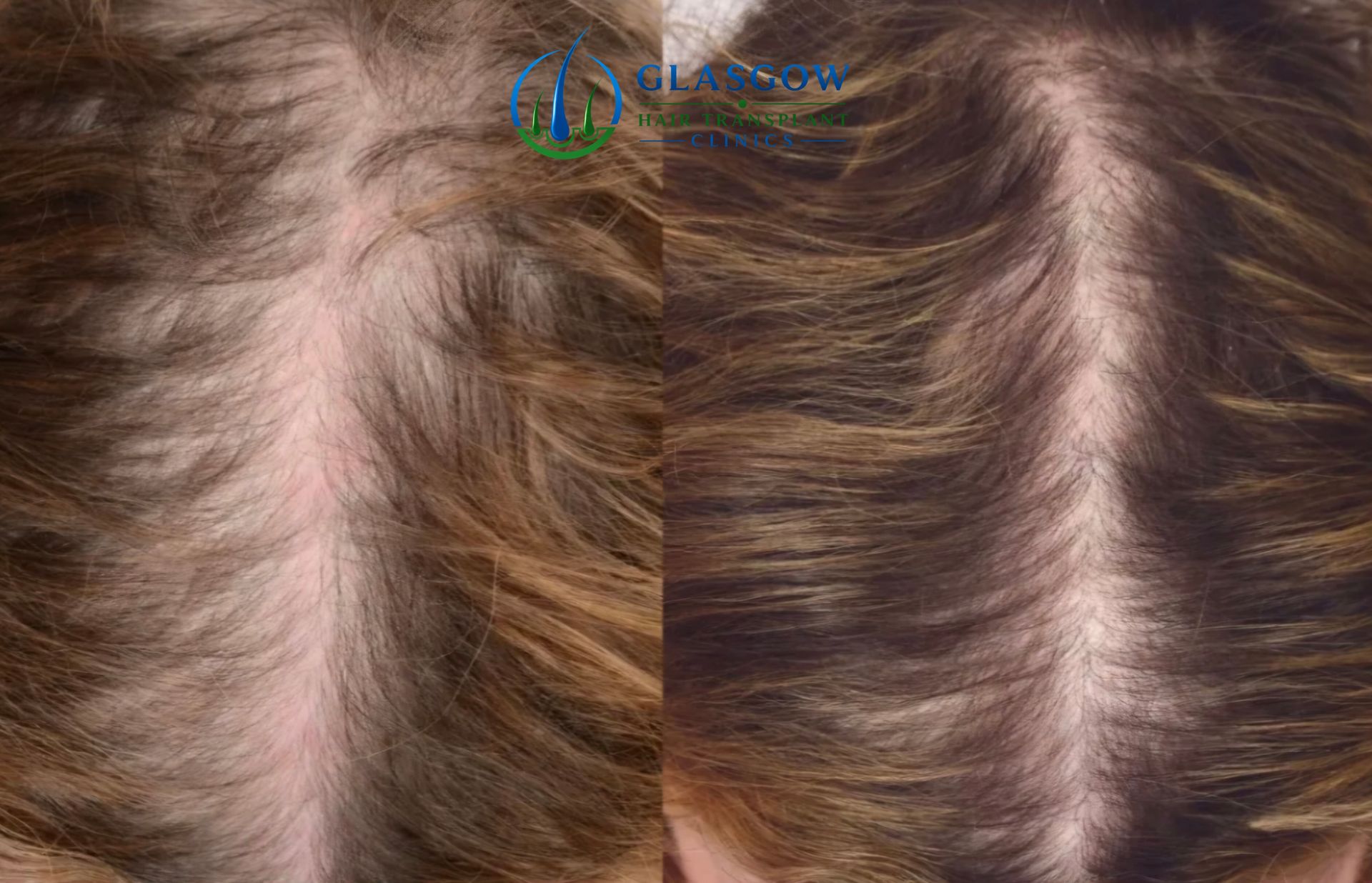
Studies suggest PRP can improve hair density and reduce hair loss in some patients. That does not mean every patient will benefit or that each existing hair will become thicker.
There are no scalp incisions, stitches or donor scars. Patients receive targeted treatment through the areas that need greater density and return to normal activities with minimal downtime.
Platelets contain growth factors involved in tissue repair. This is part of the rationale for PRP, but its biological mechanism alone cannot predict an individual hair-growth result.
A systematic review and meta-analysis of randomised clinical trials reported improved hair density and reduced hair loss, but no significant improvement in hair thickness. Differences in preparation and study design limit how precisely those results predict an individual response. A small randomised trial also found that higher platelet counts did not correlate with better clinical improvement.
PRP has minimal downtime. Most patients leave the clinic immediately and return to work or their normal routine on the same day.
Temporary tenderness, redness or swelling can occur around the injection sites. Ask the clinician about possible side effects and the aftercare that applies to your treatment.
Follow the clinic’s instructions on hair washing, exercise and heat exposure. If PRP is being used after a transplant, follow the surgeon’s post-operative plan.
The next appointment is arranged around the agreed course and your response to treatment.
PRP, medication and surgery have different roles. Their suitability depends on the diagnosis, remaining hair, medical history and the result being sought.
After FUE , DHI or FUT , discuss any additional PRP treatment with the surgeon. Its timing must fit the aftercare plan, and it should not be promised to prevent shedding.
Whether to combine PRP with medication needs an individual discussion of the likely benefits, side effects and costs. Read our hair-loss medication guide.
Case study
6 PRP sessions
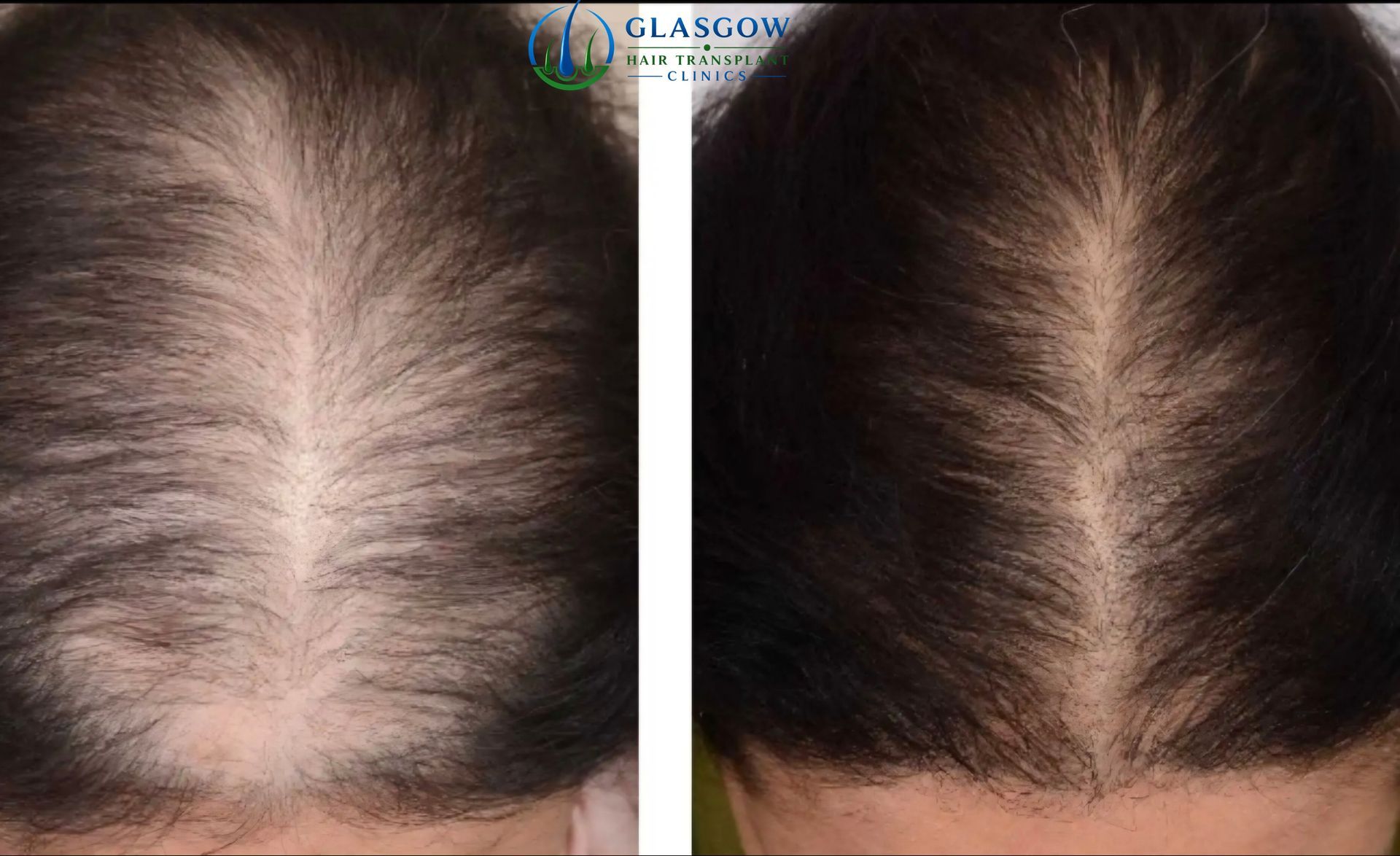
The consultation is the opportunity to understand why PRP is being proposed, who will perform the treatment and how its effects will be assessed.
Ask which preparation system is used and what evidence supports it. Platelet concentration should not be used on its own to promise a better result.
Dr Kalra assesses the hair-loss pattern and plans the treatment area. The consultation should also explain the alternatives and whether further investigation is needed.
Progress is recorded with repeat photography, allowing the number of sessions and maintenance schedule to follow the actual response rather than a generic one-size-fits-all package.
Dr Harpreet Kalra is registered with the General Medical Council under GMC number 7126076 and provides consultation-led hair restoration at Glasgow Hair Transplant Clinics.
His assessment covers the pattern of thinning, hair calibre, scalp health, family history and the amount of active hair remaining through the proposed treatment area.
Dr Kalra then plans the injection area, number of sessions and whether PRP should be combined with medication or hair transplant surgery. Progress photographs are used to track the response and plan maintenance treatment.
Book a Free Consultation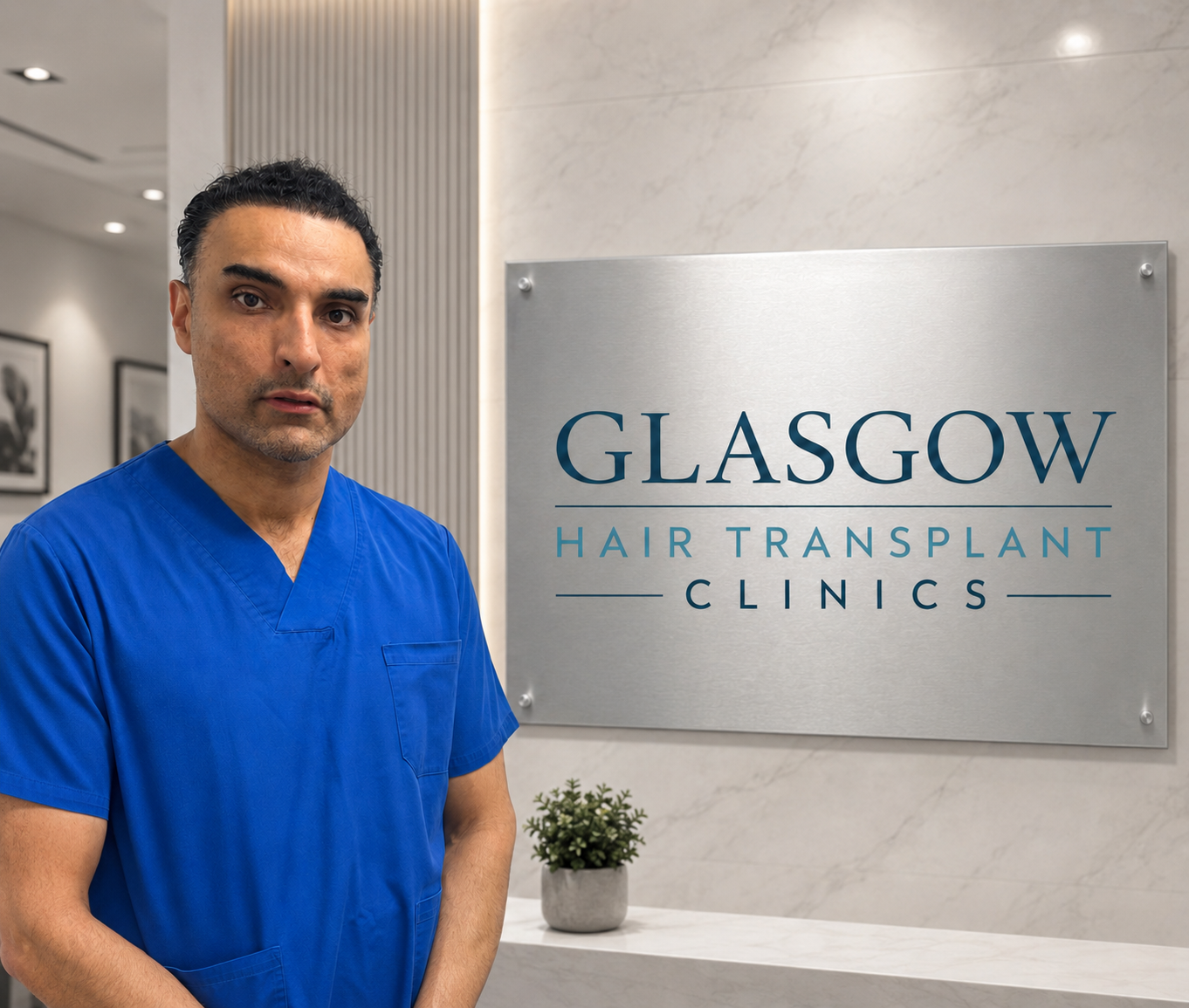
Read what patients have said about their experience with Glasgow Hair Transplant Clinics.
PRP is prepared from a sample of your own blood and injected into thinning areas of the scalp. It may improve hair density in some patients with pattern hair loss.
An initial course may involve 3–6 sessions spaced 4–6 weeks apart. The schedule and any maintenance appointments depend on the assessment and response.
Some patients notice less shedding within the first few months. Photographs over several months help assess any change in coverage; improvement is not guaranteed by a particular date.
A package of three PRP sessions costs £495 and includes blood collection, centrifuge preparation and targeted scalp injections at each appointment.
PRP may be considered for women with pattern hair loss. Widening partings and diffuse shedding need an assessment because different causes require different treatment.
Patients feel brief discomfort during the injections and temporary scalp tenderness afterwards. Treatment requires no surgery, incisions or stitches.
PRP may be discussed after surgery, but the timing should be agreed with the surgeon. It is not a guarantee against post-operative shedding.