
Hair Transplant Timeline
Recovery is measured in days; new growth is measured in months. This guide explains what may happen from procedure day through scabbing, temporary shedding, early regrowth and final maturation, including why the crown can take up to 18 months.
Our certifications




A hair transplant is usually completed in a day, but the scalp does not produce a finished result overnight. The first fortnight is mainly about protecting the grafts and allowing the donor and recipient areas to settle. The following months are about patience while transplanted follicles move through their normal cycle and begin producing new hairs.
There is no single timetable that every patient follows. The treatment area, hair characteristics, number of grafts, surgical method, scalp health and individual healing response all matter. Your clinic’s written aftercare instructions always take priority over a general guide.
The central point: a quiet or uneven appearance at six weeks, three months or even six months is not the same as a final result. Transplanted hair shafts commonly shed while the follicles remain beneath the skin, and growth normally emerges in stages.
What happens after surgery?
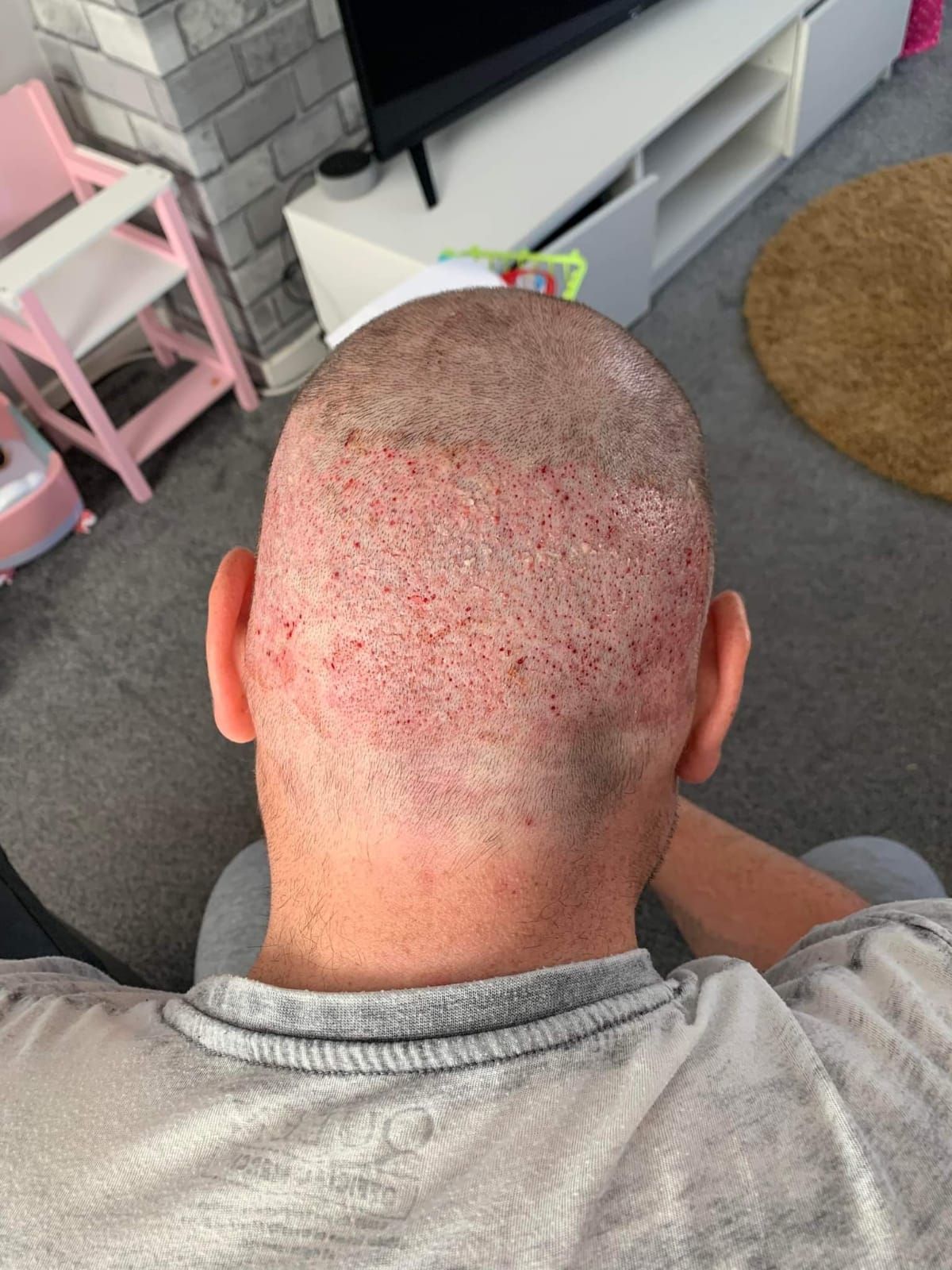
The first two weeks are mainly about healing. The recipient area may look red and scabbed, while the donor area can feel tender or tight. Most of the visible crusting settles as washing progresses, although redness can last longer in some patients.
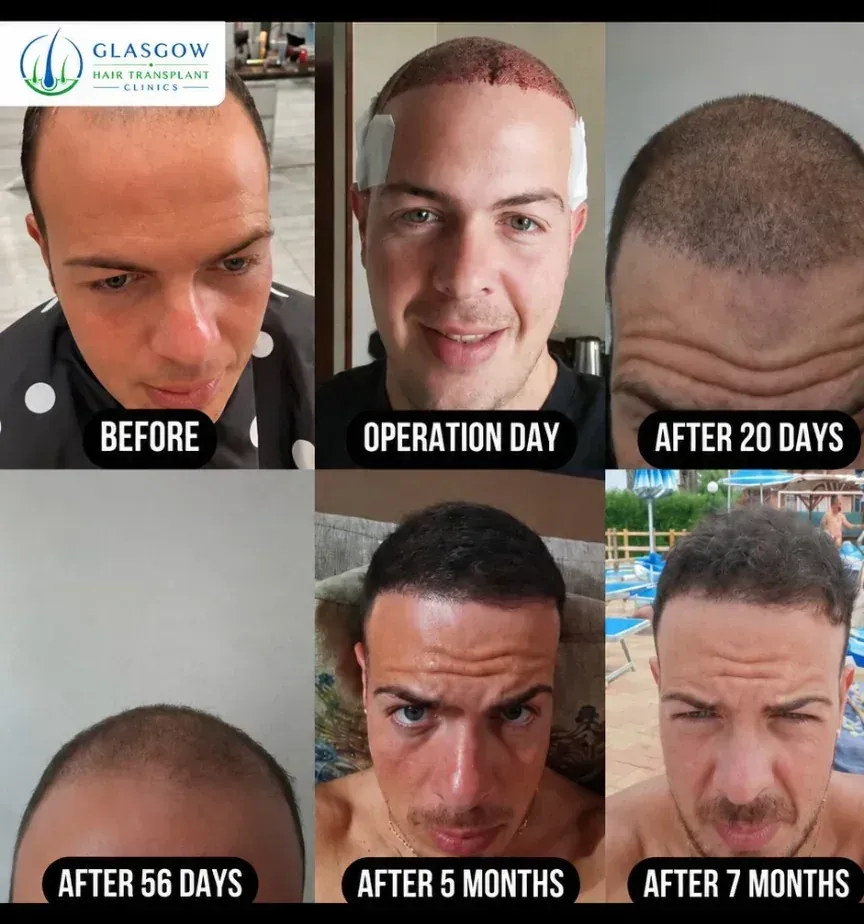
During the following weeks, some or many of the transplanted hair shafts may shed. New growth often starts to become noticeable from around the third or fourth month, but it is usually fine and uneven at first. Coverage becomes easier to assess between six and nine months. Hairline and mid-scalp work is often well developed by about a year, while the crown can continue maturing for up to 18 months.
Recovery during the first two weeks
Day 0: procedure day
Follicular units are taken from the donor area and placed into the recipient area. With FUE , the donor area has many small extraction sites. With FUT , the donor wound is closed as a line. The recipient area may look red, dotted and more densely covered because the short implanted shafts are still present.
Before you leave, the clinical team should explain how to protect the grafts, sleep, wash and use any prescribed or supplied products. Medication is individual; antibiotics or pain relief should not be started, stopped or changed unless your own clinician has advised it.
Days 1–3: protect the grafts
The grafts are at their most vulnerable to rubbing, pressure and accidental knocks. Tightness, tenderness, mild swelling and early crusting can occur. Avoid touching the recipient area unless your aftercare plan specifically tells you to do so, and keep the scalp away from high heat, heavy sweating and unapproved headwear.
Sleeping instructions vary with the area treated. Some patients are advised to keep the head raised for a short period, but use the position and duration given by the clinic rather than copying a generic routine.
Days 4–7: scabs and controlled washing
Small scabs become more visible as the surface heals. Your clinic may introduce or progress gentle washing during this period. Strong shower pressure, fingernails and rough towel drying can disturb the scalp, so follow the washing method demonstrated to you. The Glasgow aftercare guide explains the wider principles.
Days 8–14: visible healing
Scabs usually loosen and reduce as washing continues. Redness can fade quickly in some people and remain visible for longer in others, particularly where skin tone, scalp sensitivity or the size of the treated area differs. Do not pick or scratch crusts. If your clinic wants them removed by a particular date, follow its specific technique and timing.
Many people feel ready for ordinary desk-based work before the end of the second week, although appearance, swelling and the nature of the job can change that decision. Strenuous exercise, swimming, sauna use and contact sport should only restart when the treating clinic says it is appropriate.
Weeks 3–8: shedding and the quiet phase
Shedding after a hair transplant is common, but it is not universal and the amount varies. What normally falls is the visible transplanted hair shaft, not the follicle secured beneath the skin. Existing non-transplanted hairs near the recipient area can also enter a temporary resting phase, often described as shock loss.
This stage can be unsettling because the scalp may look similar to, or sometimes thinner than, the starting point. It is too early to judge graft survival or final density. Read the dedicated guide to hair transplant shedding and shock loss for a fuller explanation.
Finasteride, minoxidil and other hair-loss treatments are not a guaranteed way to prevent post-operative shedding. They may form part of a longer-term plan for suitable patients, but timing and suitability need individual clinical advice.
Hair growth month by month
Months 2–3: little visible change
This is often the quietest and most frustrating part of the timeline. The implanted shafts may have shed, while new hairs are not yet obvious above the skin. A lack of dramatic change at this point does not by itself show that the procedure has failed.
Months 3–4: the earliest growth may appear
Some patients begin to see fine, light or uneven hairs. Others take longer. New growth rarely arrives at the same time across the whole treated area, so an early patchy appearance can be part of normal development.
Months 5–6: visible change becomes easier to see
More hairs may emerge and earlier growth can gain length. The transplanted area often becomes easier to style, but six months is a progress point rather than a final result. Hair calibre, texture and coverage can still change substantially.
Months 7–9: improving coverage and texture
Growth is usually more established. Some hairs remain finer or more wiry than their later appearance while they mature. The perceived density depends not only on the number of growing hairs but also on calibre, curl, colour contrast, direction and styling length.
Compare standardised photographs rather than checking daily. Use the same light, camera angle, distance, hair length and wet-or-dry condition so the comparison is meaningful.
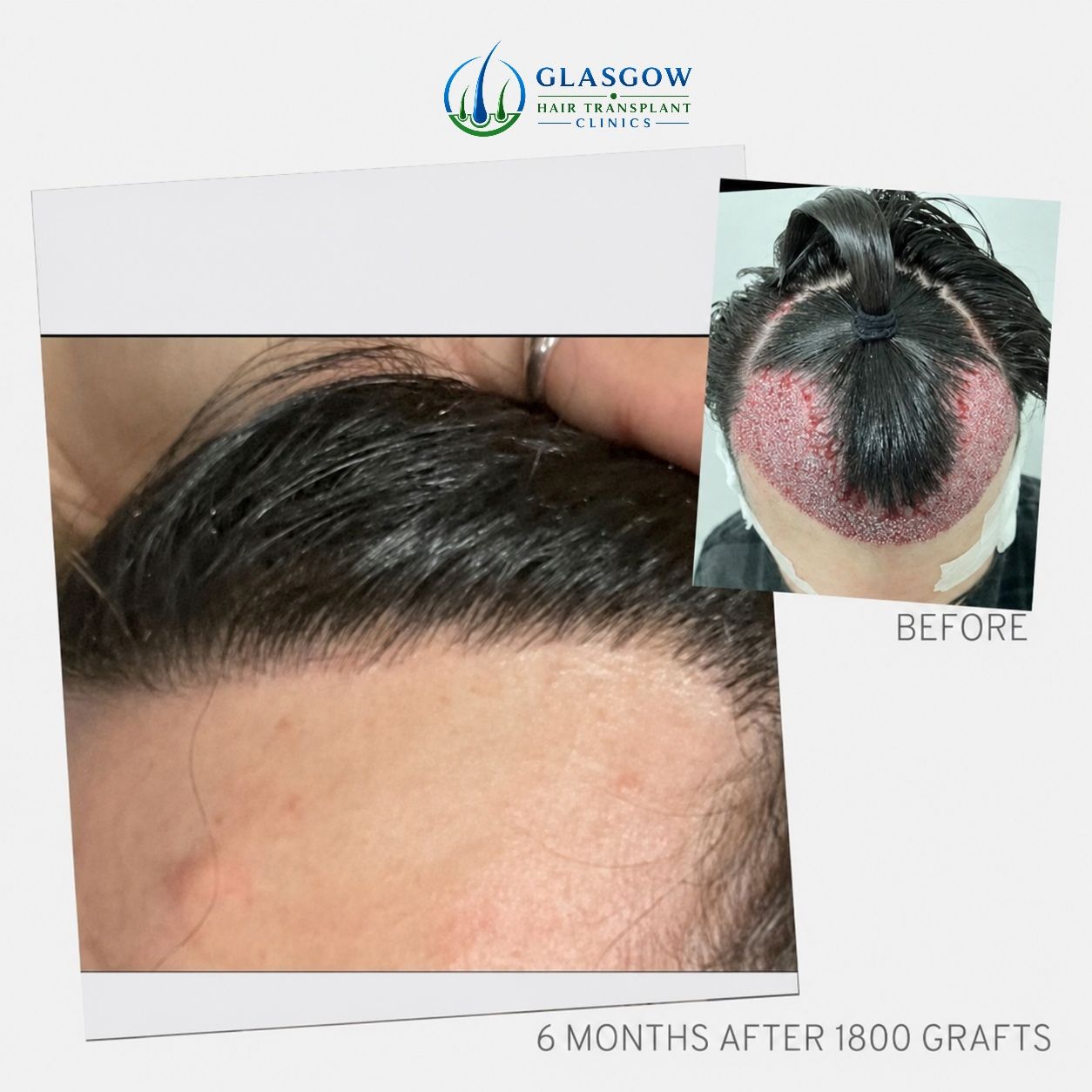
Months 10–12: a more mature result
For many hairline and mid-scalp procedures, the result is substantially developed by around one year. Later-emerging hairs may still thicken and soften, and the result should be assessed in the context of the original design, donor supply and starting pattern—not against a different patient’s photographs.
Months 12–18: late maturation, especially in the crown
The crown can sit toward the slower end of the range because of its whorl pattern, larger visual surface and the way overhead light reveals scalp between hairs. Maturation may continue through 12–18 months. “Final” also does not mean that untreated native hair can never thin later.
A hair transplant redistributes selected follicles; it does not cure the underlying tendency to pattern hair loss. Long-term planning may include monitoring, medical hair-loss treatment for suitable patients, or preserving donor reserve for the future.
Why one patient’s timeline differs from another
- Treatment area: frontal work can become cosmetically noticeable before a crown result reaches the same level of maturity.
- Hair characteristics: calibre, curl, colour contrast and styling length change how much coverage is visible.
- Diagnosis and ongoing loss: transplanted follicles and surrounding native hairs do not necessarily behave in the same way.
- Graft numbers and previous surgery: larger or repair procedures can produce a different recovery experience.
- Scalp and general health: inflammation, smoking and medical conditions can affect healing or the wider plan.
- Aftercare: early graft protection and following the written washing, activity and sun-exposure instructions remain important.
What happens to the donor area?
The donor area has its own recovery. After FUE, small extraction sites crust and settle across the harvest zone. Short surrounding hair can help disguise the area as it grows. After FUT, the linear donor wound has a different healing and scar-care timeline. In either case, the donor region should be assessed for healing as well as appearance.
Read the detailed hair transplant donor area guide to understand safe-zone planning, FUE and FUT scar patterns, temporary shock loss and why donor hair is a limited resource.
Does the method change the timeline?
FUE
Individual follicular units are extracted with small punches. The donor area has many small wounds rather than one line, but visible growth in the recipient area still takes months.
DHI
DHI describes an implantation approach. When grafts are harvested by FUE, the broad shedding and growth phases remain similar. It should not be presented as a way to eliminate shedding.
FUT
A strip of donor scalp is removed and closed as a line. Donor wound care differs from FUE, while transplanted follicles still pass through the same broad growth cycle.
When should you contact the clinic?
Mild redness, scabbing, tightness and temporary shedding can be part of recovery. Symptoms that are severe, worsening or unexpected should not be dismissed as “normal”. Contact the treating clinic promptly if you are concerned, particularly with:
- persistent or heavy bleeding;
- severe or escalating pain;
- spreading redness, heat, pus, discharge or an unpleasant smell;
- fever or feeling seriously unwell;
- breathing difficulty or a suspected allergic reaction;
- dark, dusky or otherwise concerning skin-colour changes; or
- trauma to the grafts or donor area.
Do not wait for a routine review if symptoms are worsening. Seek urgent medical help where appropriate. General online information cannot assess an individual wound.
Frequently asked questions
When does transplanted hair start growing?
Some early growth may become visible around months three to four, but it is often fine, uneven and staggered. More noticeable improvement normally develops over the following months.
Does every patient shed after a hair transplant?
No. Shedding of transplanted shafts is common, but the amount varies and some patients notice little. When it occurs, the follicle normally remains beneath the skin while the visible shaft falls.
Is six months the final result?
No. Six months is a useful progress point, not the finished result. Hair length, calibre, texture and coverage may continue improving through months 10–18.
Why can the crown take longer?
The crown’s whorl pattern, surface area and exposure to overhead light can make cosmetic coverage slower to appear. Maturation may continue toward 18 months.
When do the scabs come off?
Scabs usually reduce during the first one to two weeks, but removal should follow the clinic’s washing technique and timing. Do not pick or scratch them.
When can I return to work?
That depends on the job, the size and visibility of the treated area, swelling and how you feel. Some people resume desk work within several days; physically demanding or public-facing work may need longer.
When can I exercise?
The answer depends on the procedure and your recovery. Heavy sweating, heat, swimming and contact risk are usually restricted early on. Restart activity according to your written aftercare plan.
Can medication prevent transplant shedding?
No medicine can guarantee that temporary shedding will not occur. Hair-loss medication may support suitable native hair as part of a longer-term plan, but it should only be used following individual clinical advice.
How should I track progress?
Take photographs about once a month using the same lighting, angle, distance, hair length and wet-or-dry condition. Daily comparisons are usually misleading.

Reviewed by Dr Harpreet Kalra
Dr Harpreet Kalra is the medical author for Glasgow Hair Transplant Clinics. for his professional background and approach to assessment, surgical planning and follow-up.