

Glasgow consultation enquiry
Hair Transplant Glasgow
Considering a hair transplant in Glasgow? Book a free consultation at Tay House, 300 Bath Street, to discuss your hair loss, treatment options and likely cost.
Your consultation covers the areas you want to restore, your donor hair and medical history. Dr Harpreet Kalra assesses these factors before recommending a technique or graft number.
FUE starts from £1,999 for 500 grafts. View our graft prices and patient results before booking.




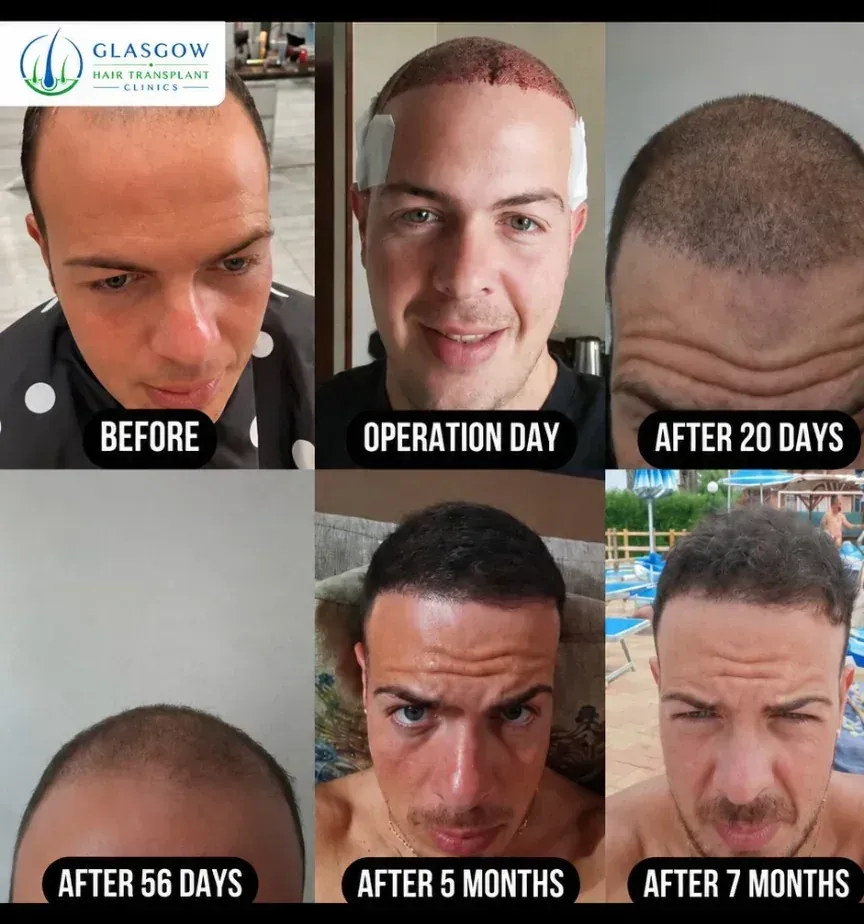
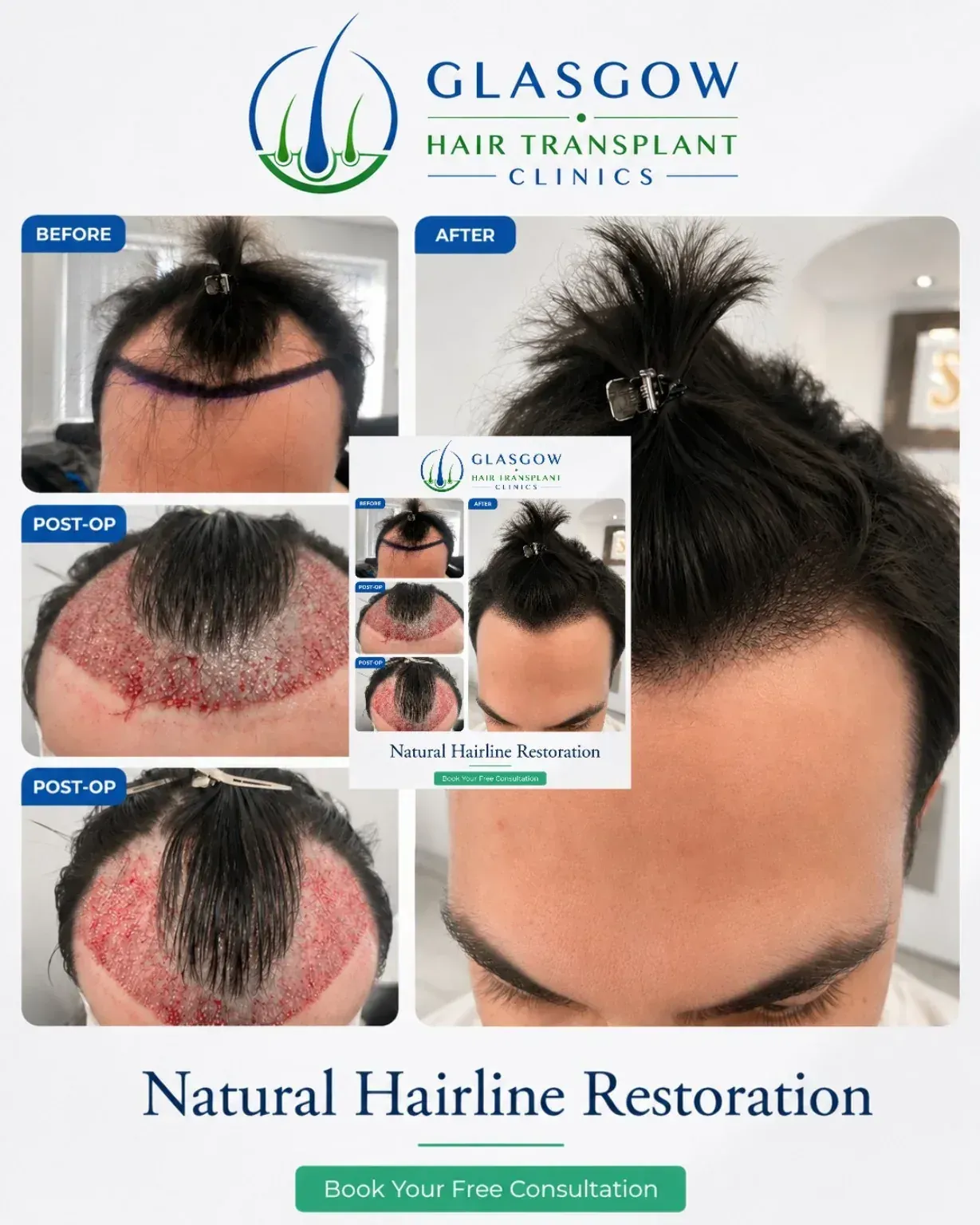
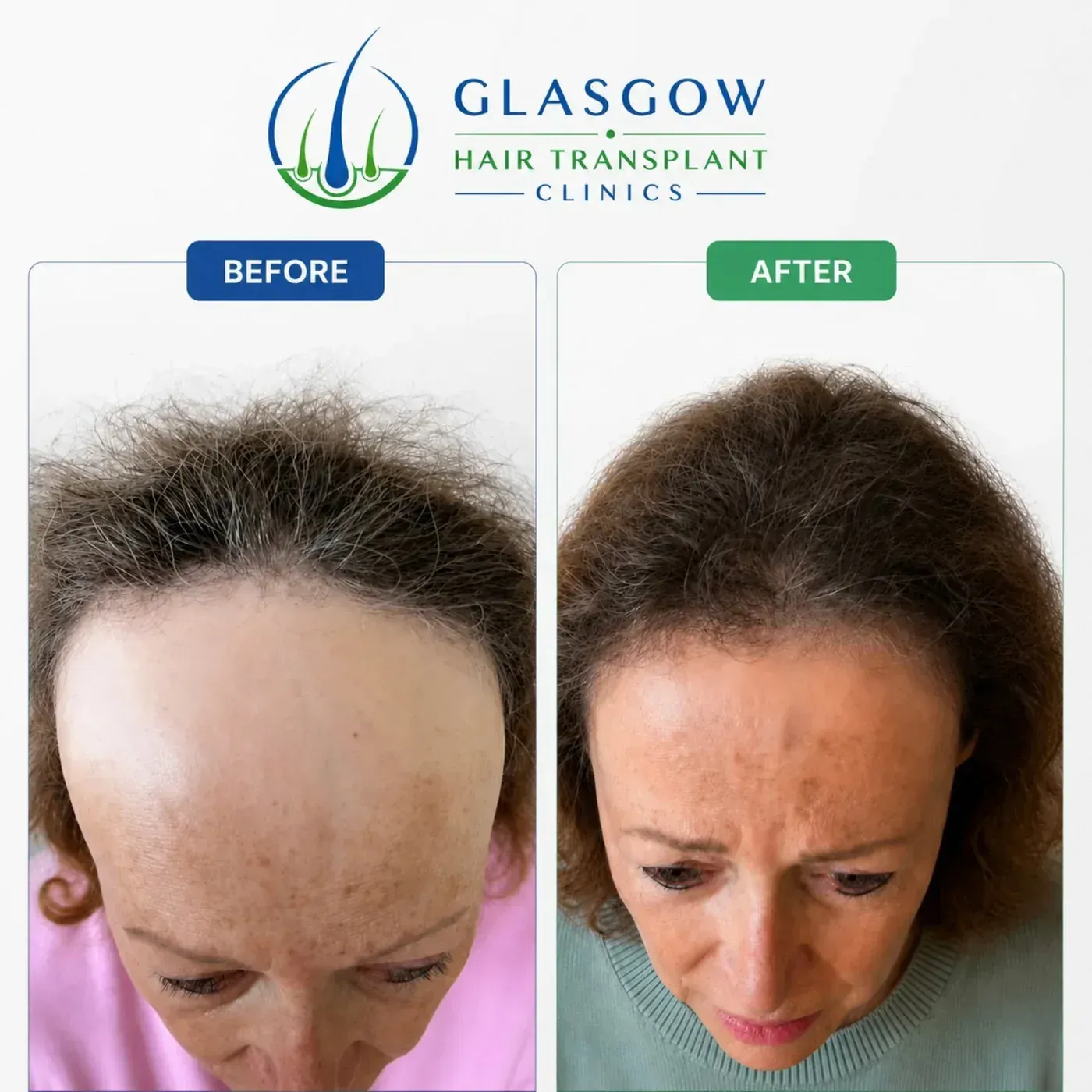
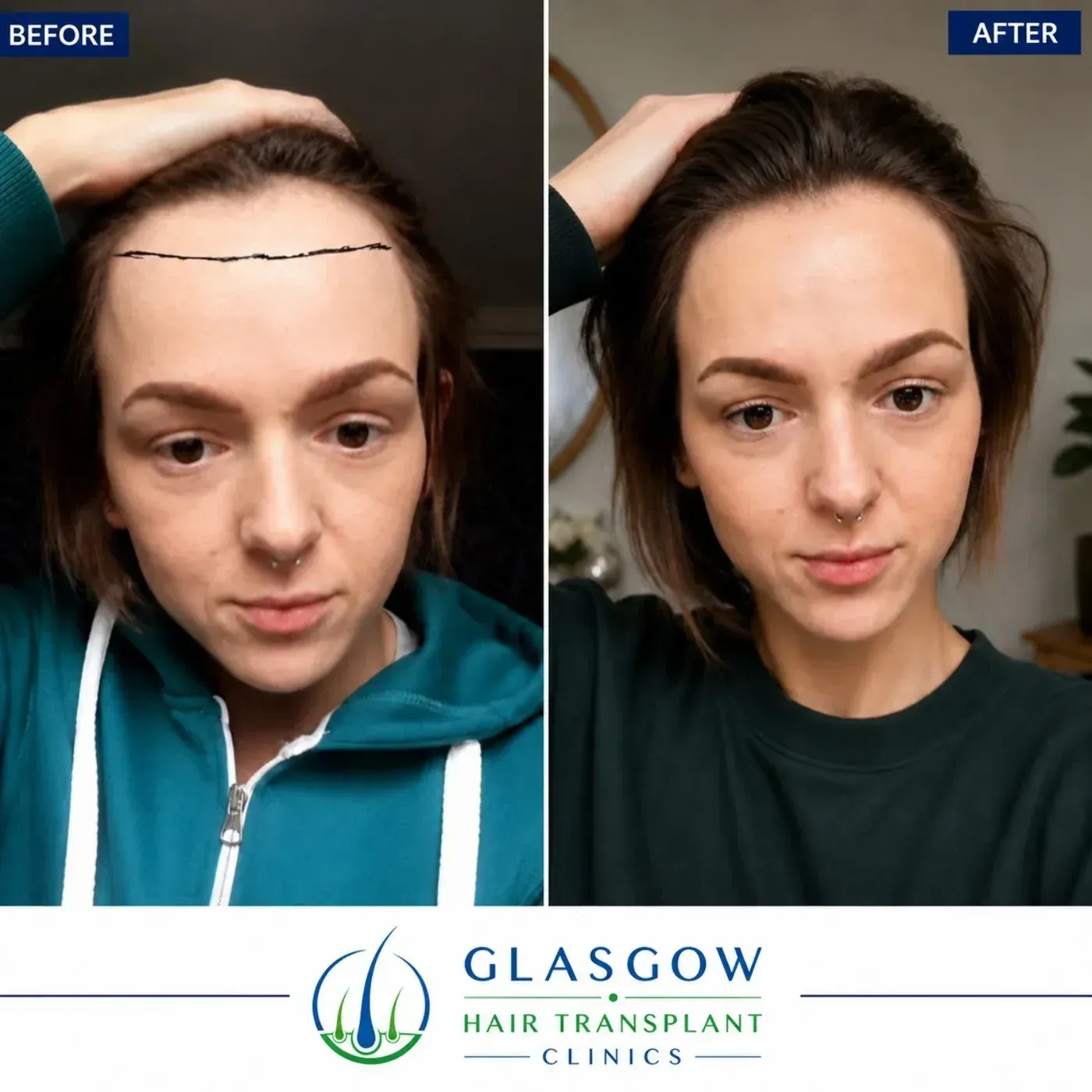
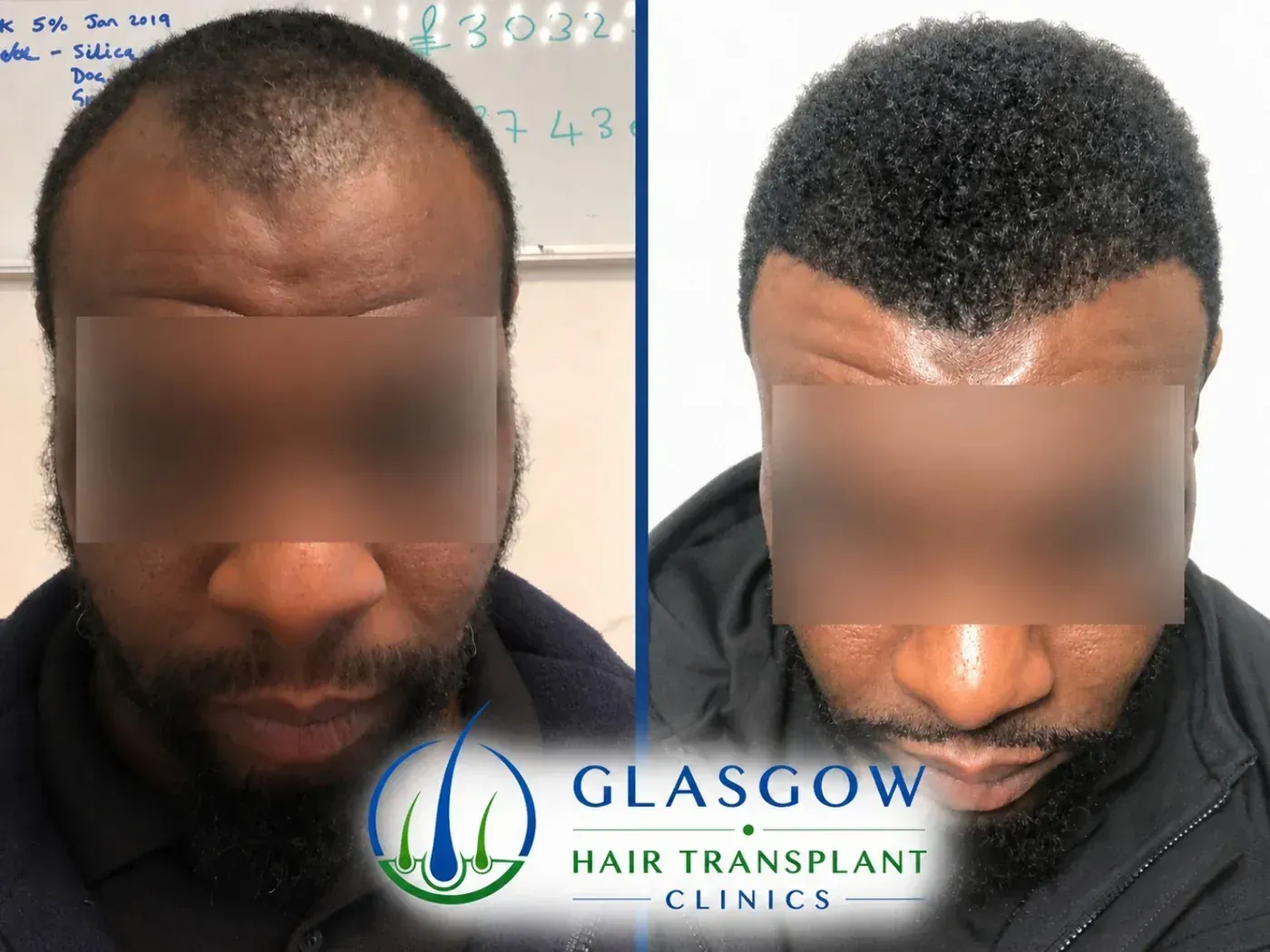
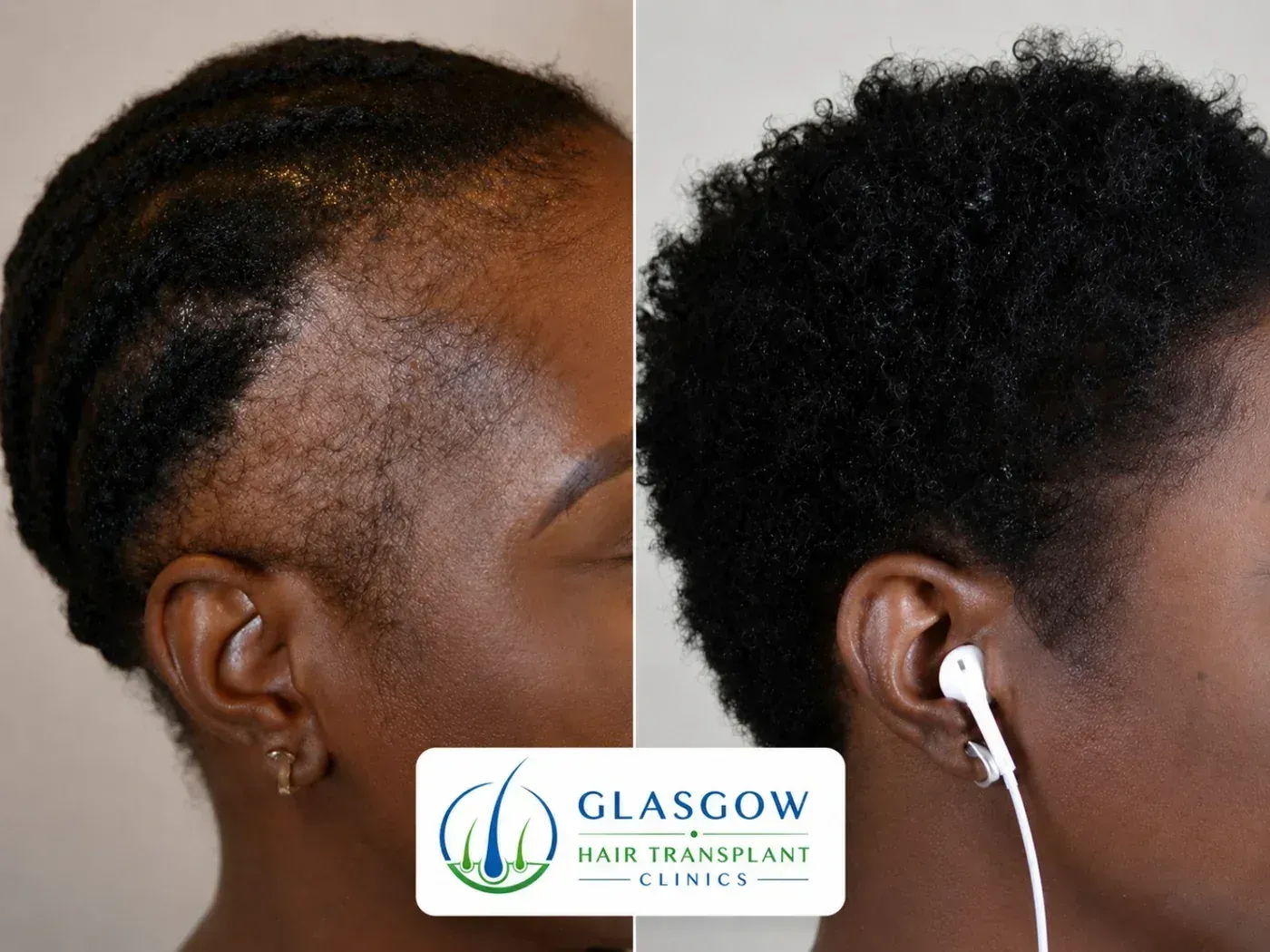
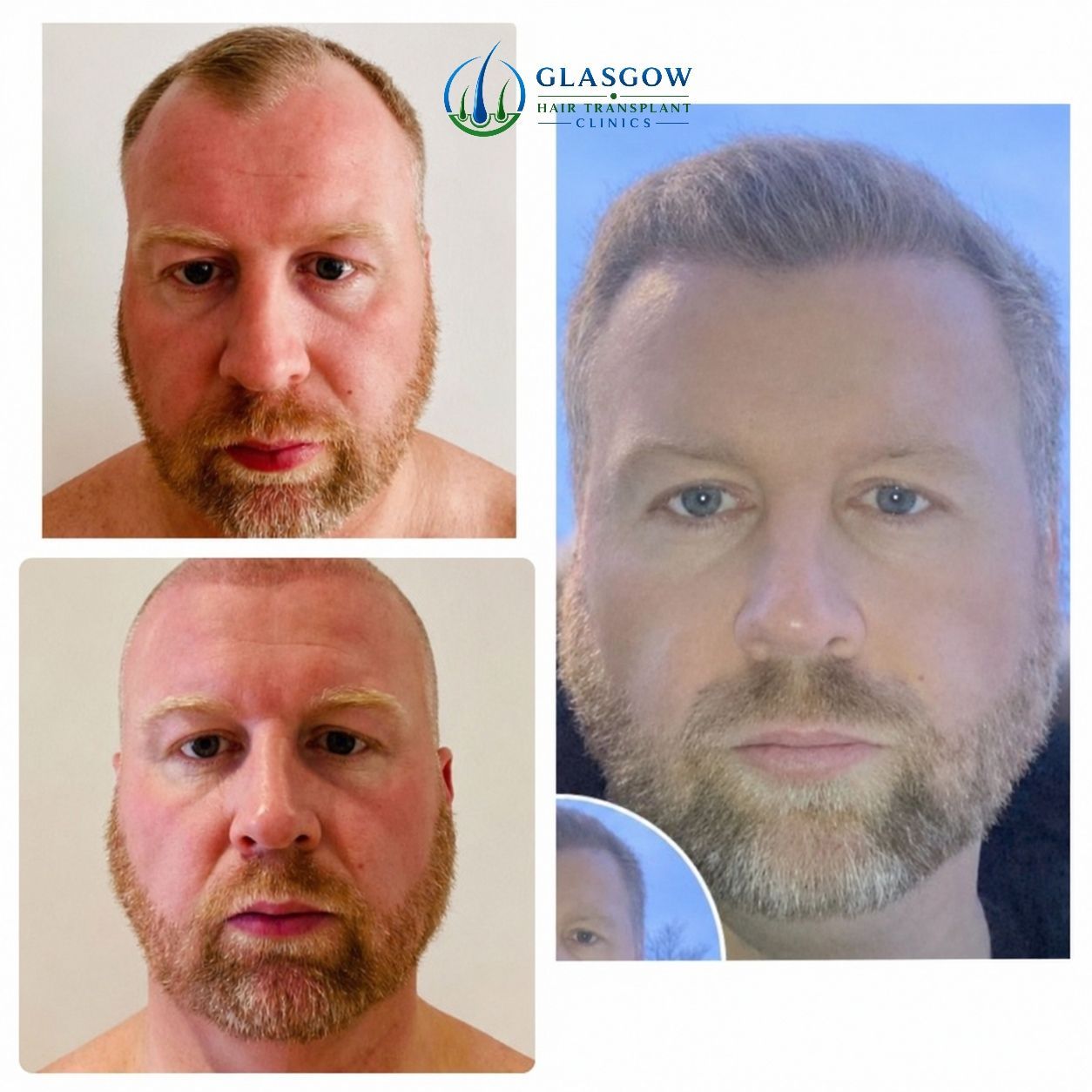
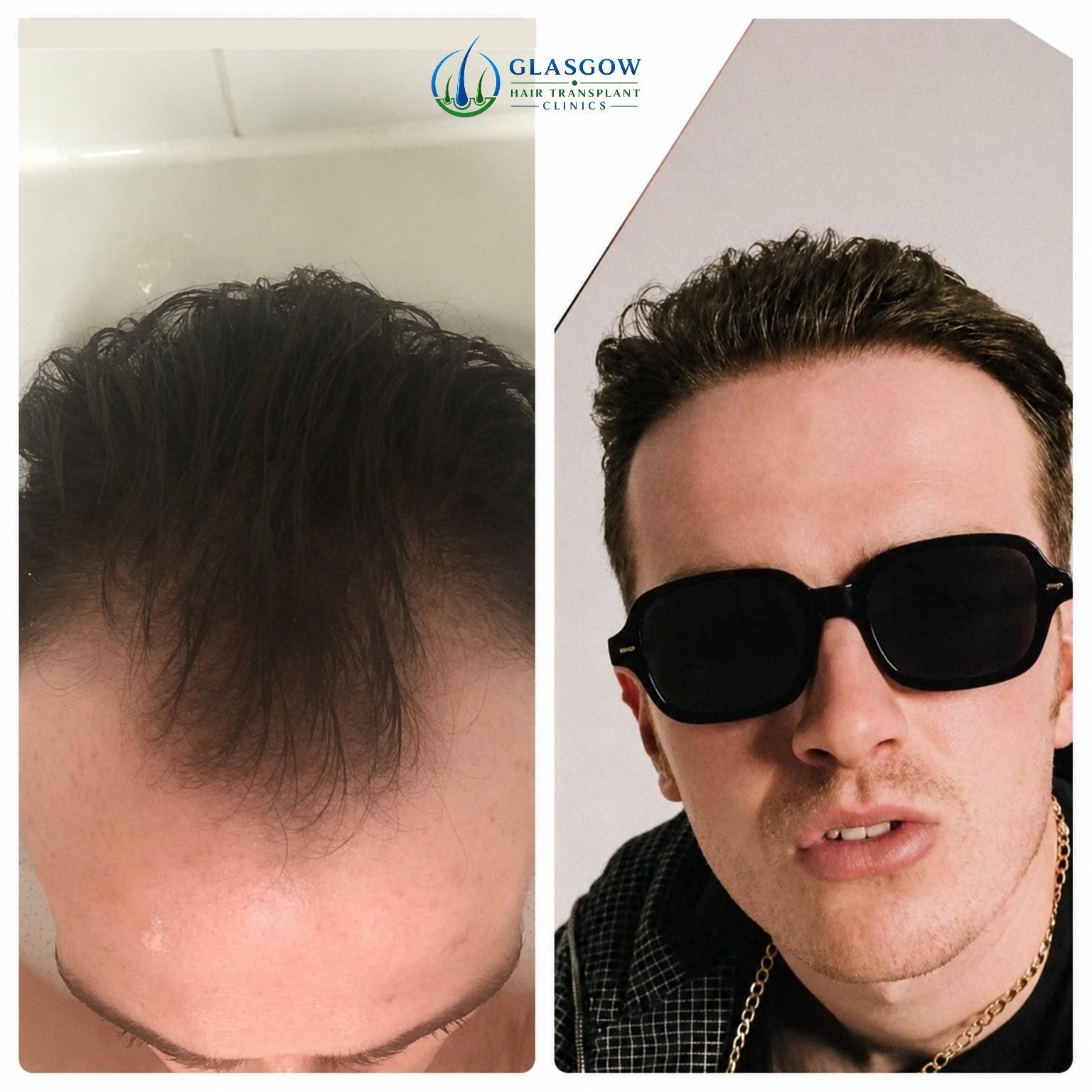
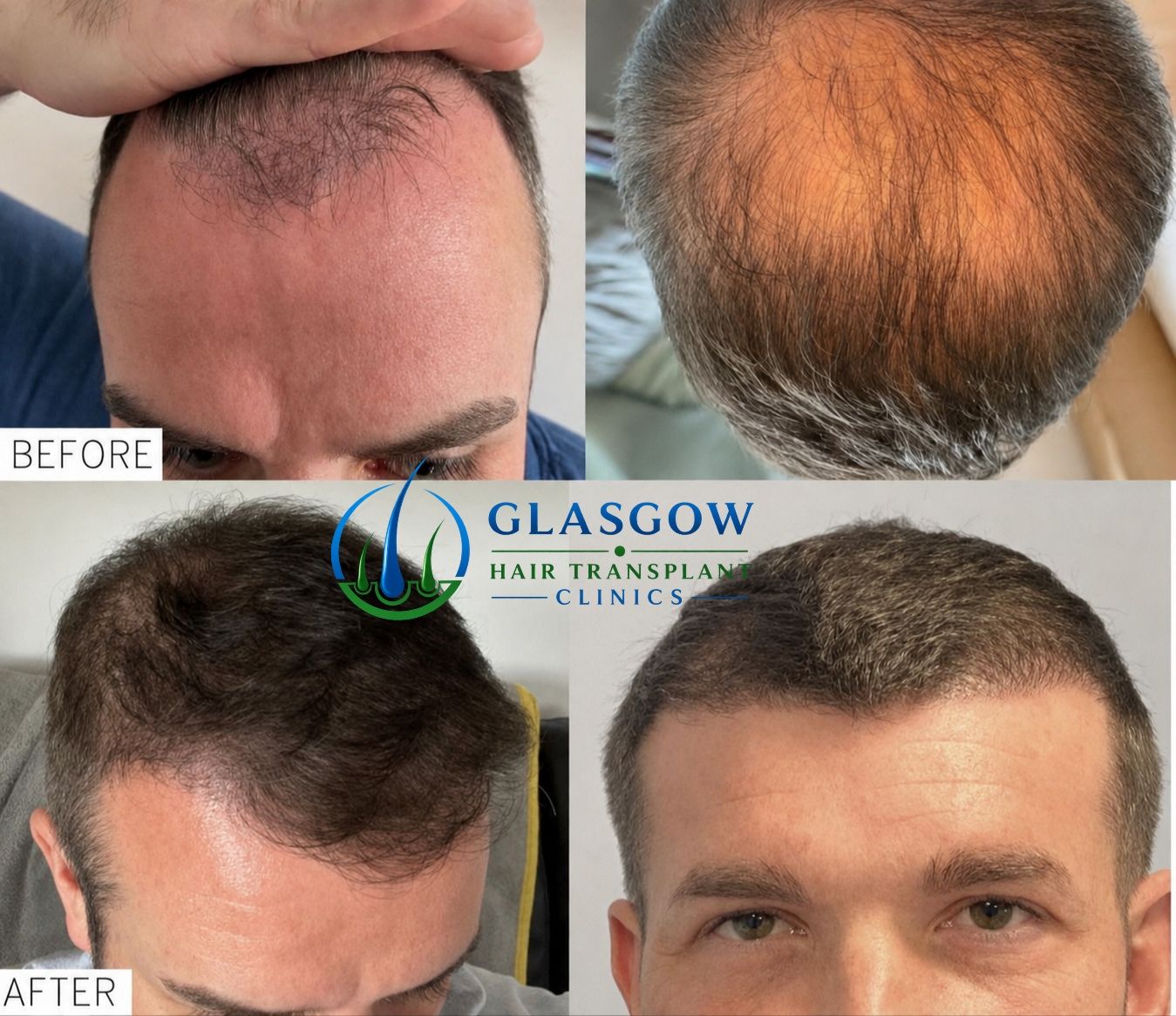
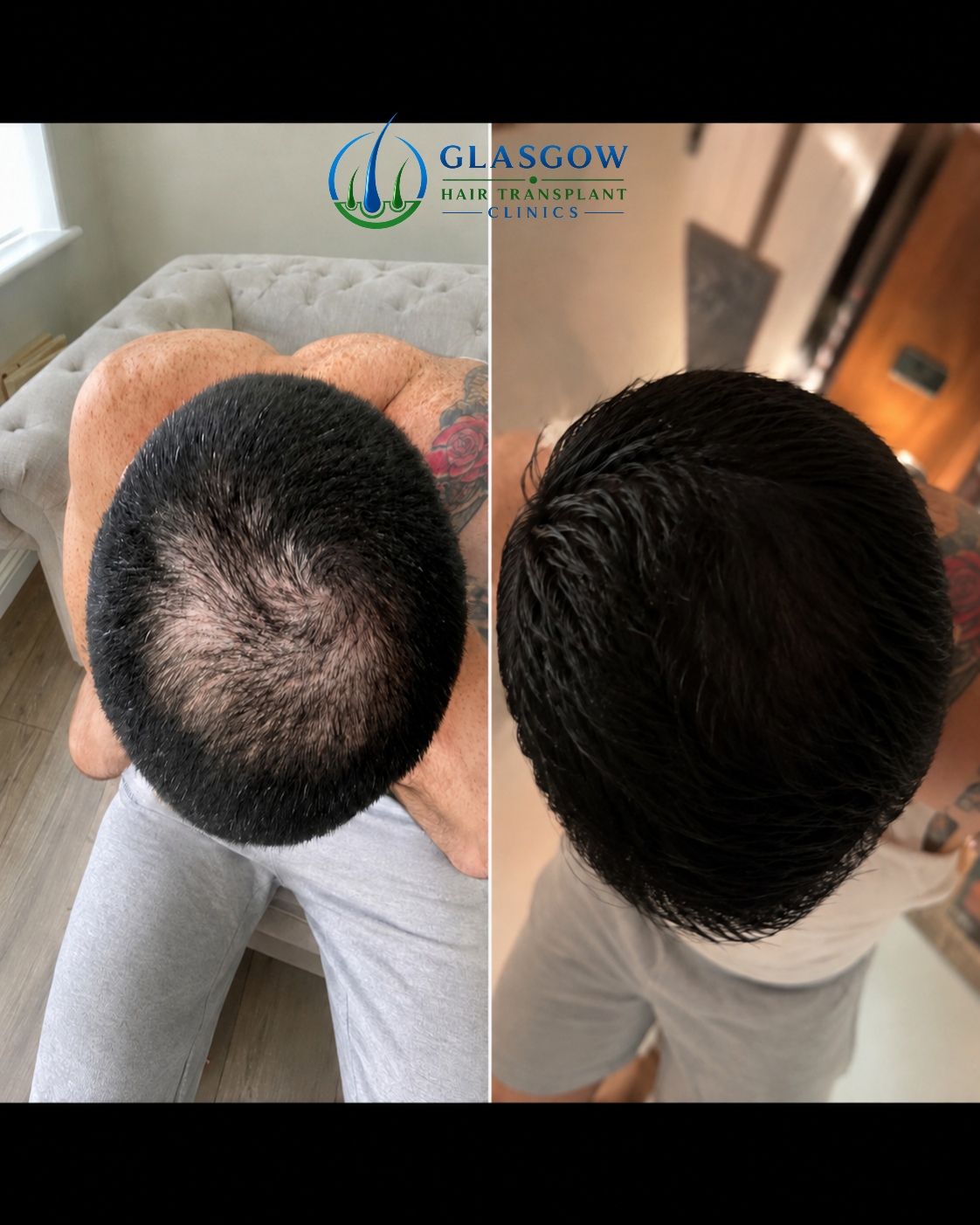
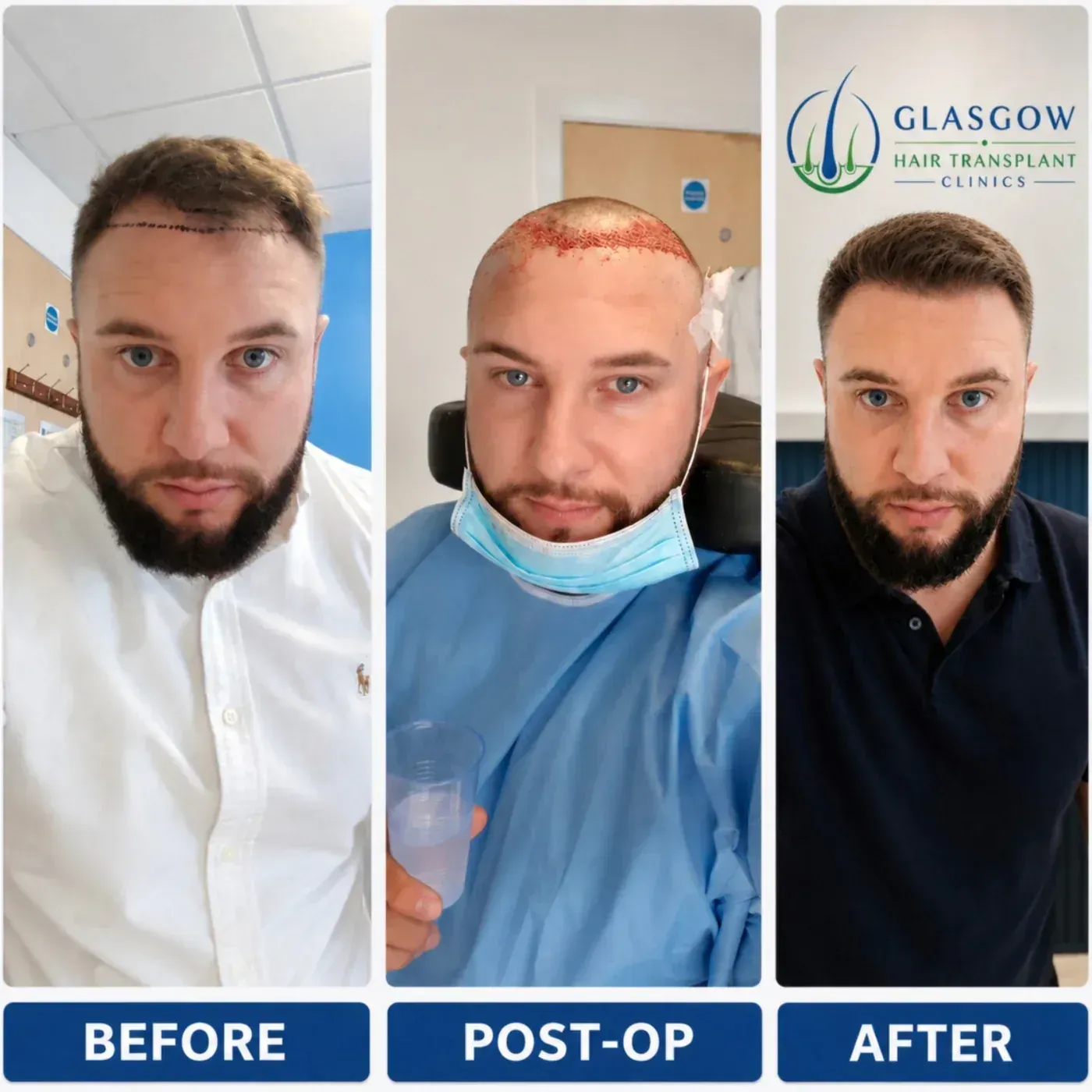
Hair Transplant Before & After Results
View a selection of patient results from different hair-restoration treatments.
About Glasgow Hair Transplant Clinics
Our Glasgow team helps you compare hair restoration options, from medical and non-surgical treatments to FUE, DHI and FUT hair transplantation. A consultation is the starting point for finding out whether surgery is suitable for you.
Before treatment is recommended, the pattern of hair loss, strength of the donor area, existing hair, medical history and longer-term treatment goals should all be considered.
Treatment planning may involve the hairline, temples, mid-scalp or crown depending on the patient's pattern of loss and available donor supply.
Patients can compare FUE extraction and recovery, DHI and FUT hair transplantation before deciding which route may be appropriate.
Hair loss and thinning hair: where to start
Not every change in hair density calls for surgery. Read about male pattern baldness and androgenetic alopecia, women's hair loss and other hair loss symptoms and causes before comparing treatments. A consultation should establish why your hair is thinning and what can realistically improve its appearance.
For a hair transplant in Glasgow, compare the proposed technique, donor supply, before and after results and aftercare. People searching for the best hair transplant clinic should ask who will perform each stage and where their consultation and surgery will take place.
Our Glasgow hair transplant cost guide explains pricing. If you are considering hair transplant finance, read the terms and ask for the total amount payable alongside your treatment quotation.
Hair transplant treatments in Glasgow
- FUE Hair Transplant Glasgow — Follicular Unit Extraction
- DHI Hair Transplant Glasgow — Direct Hair Implantation
- FUT Hair Transplant Glasgow — Follicular Unit Transplantation
- Hairline Transplant Glasgow
- Crown Hair Transplant Glasgow
- Beard Transplant Glasgow
- Eyebrow Hair Transplant Glasgow
- Gender-affirming Hair Transplant Glasgow
- Hair Transplant Cost
- PRP Treatment
- Widow's Peak Hair Transplant Glasgow
- Hair Transplant for Scars Glasgow
- Women's Hair Transplant Glasgow
- Afro Hair Transplant Glasgow
- Temple Hair Transplant Glasgow
Your treatment plan depends on the area you want to restore, the hair you already have and the donor hair available. During your consultation, we discuss the proposed design, likely graft requirement and what the procedure could achieve.
Professional footballer Kyle Walker attended a consultation with Harley Street Hair Transplants, part of our wider clinic group. Read the account of his consultation and FUE recommendation.
To discuss your hair loss, send an enquiry or call 0141 363 0019. Our Glasgow price guide and no-deposit information explain the costs and payment options before you book.
Book a Free ConsultationPatient Videos & Hair Transplant Experiences
Glasgow Google reviews
Visited our Glasgow team? Share your experience on Google.
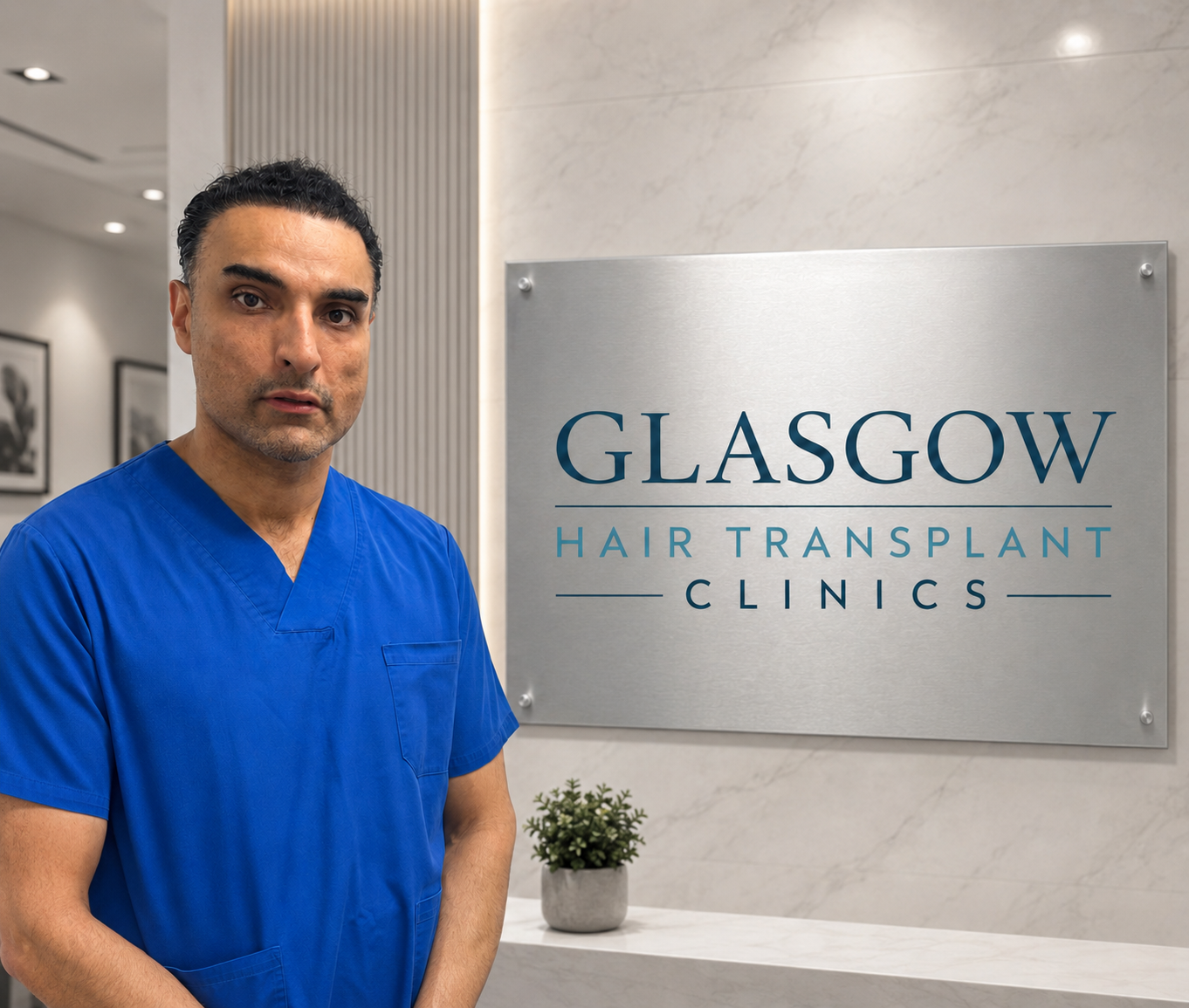
Meet Dr Harpreet Kalra
Dr Harpreet Kalra is involved in consultation-led hair transplant planning, including donor-area assessment, hairline design, crown planning, graft-number discussion and medical-history review.
The aim of consultation is to establish suitability first and then consider the treatment route, donor supply, recovery and realistic longer-term expectations.
Dr Kalra is registered with the General Medical Council, GMC reference 7126076.
Consultations and surgery locations
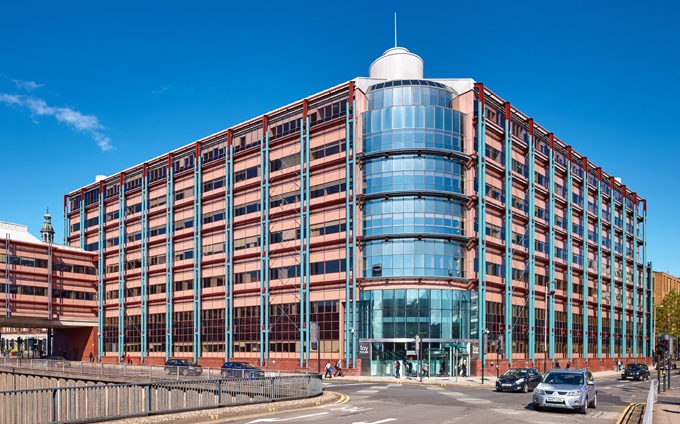
Our Glasgow consultations take place at Tay House on Bath Street, in Glasgow city centre.
Glasgow surgery: St. Ellen’s Daycase Hospital, 410 Sauchiehall St, Glasgow, G2 3JD.
Livingston surgery: St. Ellen’s Hospital Livingston, 2 Garbett Road, Livingston, EH54 7DL.
Confirm which hospital applies to your booking before arranging travel.
Tay House
300 Bath Street
Glasgow
G2 4JR
An Experienced Hair Restoration Team
Treatment planning considers donor supply, existing density, hair characteristics, treatment area and the patient's longer-term pattern of hair loss.
Dr Harpreet Kalra is involved in consultation-led treatment planning and is registered with the General Medical Council, GMC reference 7126076.
Scottish Locations
Patients contact us from different parts of Scotland when researching hair transplant treatment, costs, recovery and consultation options.
Our dedicated locations page brings together the areas we cover and information for patients travelling to our clinics.
View Our LocationsHair Transplant FAQs
How do I know if I am suitable for a hair transplant?
Suitability depends on your pattern and cause of hair loss, the quality and amount of available donor hair, your medical history and the likelihood of further thinning. These factors should be assessed before surgery or a graft number is recommended.
How many grafts will I need?
The number of grafts varies between patients and depends on the area being restored, existing density, desired coverage and available donor supply. You can read more about how donor hair is assessed in our hair transplant donor area guide.
What is the difference between FUE, DHI and FUT?
FUE (follicular unit extraction) and FUT describe how donor grafts are collected. DHI (direct hair implantation) describes placement with an implanter device and can follow FUE collection in the same procedure. The plan should explain both stages and why they suit your donor area and goals. Compare our FUE, DHI and FUT information.
How long does a hair transplant take to grow?
Transplanted hairs commonly go through an early healing and shedding stage before new growth develops gradually over the following months. Density and maturation continue to change with time. See our hair transplant timeline for the main recovery and growth stages.
How much does a hair transplant cost in Glasgow?
The cost depends on factors such as the treatment area, graft requirements, technique and complexity of the individual procedure. Our Glasgow hair transplant cost guide explains the main pricing considerations in more detail.
Can existing hair continue to thin after a hair transplant?
Yes. A transplant moves selected follicles into areas requiring restoration, but existing non-transplanted hair can continue to thin. Where appropriate, patients may also discuss longer-term options such as hair-loss medication.
What should I expect during hair transplant recovery?
The early recovery period can include redness, crusting and temporary shedding before new transplanted hairs begin to grow. Our hair transplant aftercare guide explains how the scalp should be looked after following treatment.
Where do consultations and surgery take place?
Glasgow consultations take place at Tay House, 300 Bath Street, Glasgow, G2 4JR. Hair transplant surgery takes place at St. Ellen’s Daycase Hospital, 410 Sauchiehall St, Glasgow, G2 3JD, or St. Ellen’s Hospital Livingston, 2 Garbett Road, Livingston, EH54 7DL. Confirm which hospital applies to your booking before arranging travel. To arrange a consultation, use our contact page or call 0141 363 0019.
Latest Hair Transplant Guides
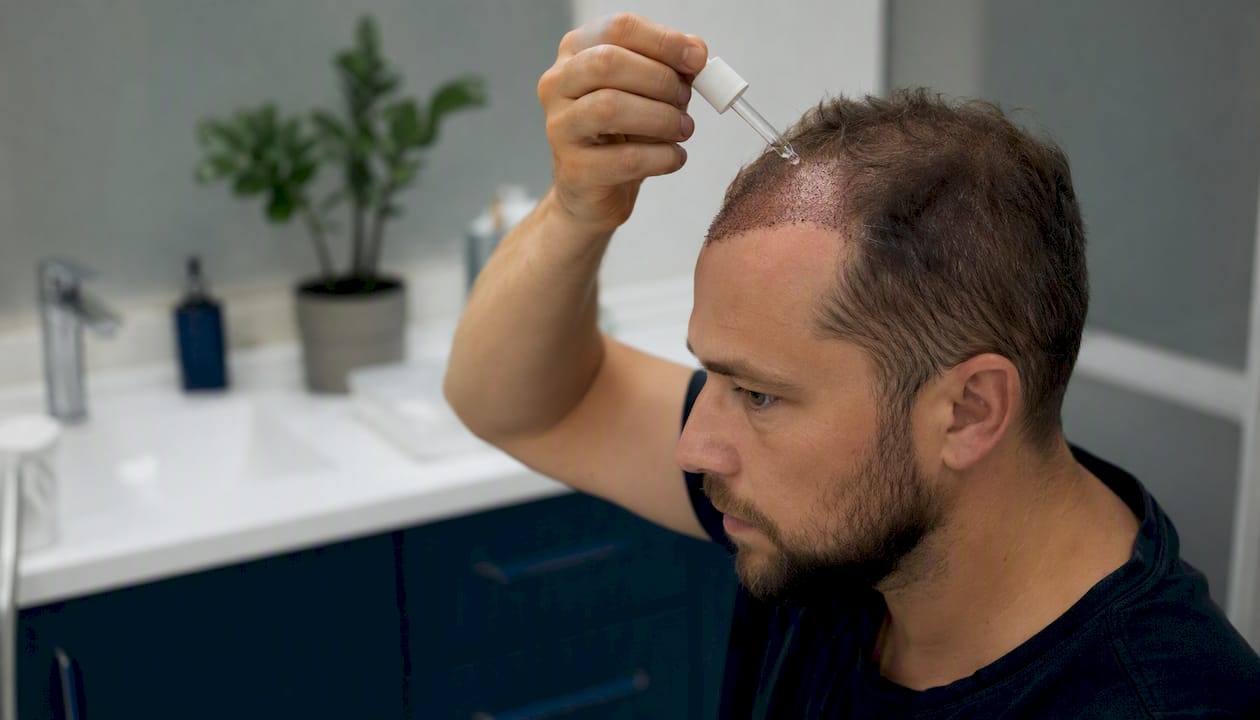
Finasteride After Hair Transplant: UK Patient Guide
Understand why finasteride may be discussed after a hair transplant, how it relates to ongoing hair loss and what UK patients should consider before treatment.

FUE Cost UK: Realistic Price Guide for 2026
A practical look at FUE hair transplant pricing in the UK, including graft requirements, clinic quotes and the factors that can affect treatment cost.
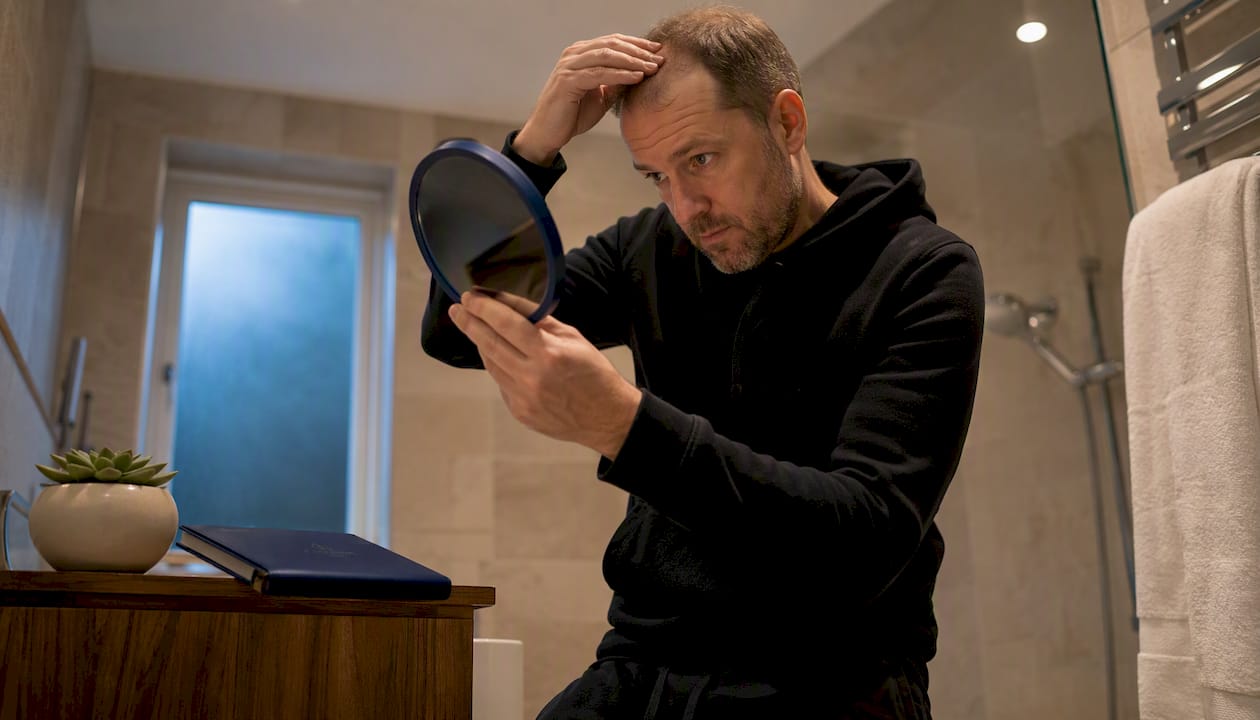
Hair Transplant Recovery Time: What to Expect in the UK
Follow the typical recovery period from the first days of healing through shedding, early regrowth and longer-term hair transplant maturation.