Eyebrow Transplant Glasgow
An eyebrow transplant restores real hair to brows that have become sparse, uneven, over-plucked or affected by scarring. Because the eyebrows sit directly on the face, the shape and direction of every graft matters.
At Glasgow Hair Transplant Clinics, Dr Harpreet Kalra can assess the existing brow shape, facial proportions and donor hair before planning the new outline. FUE is normally used to obtain the small individual follicular units needed for detailed eyebrow work.




Eyebrow Transplant in Glasgow
An eyebrow transplant moves individual hair follicles from the scalp into areas of the brow where hair is missing or noticeably thin. The transplanted follicles establish new hair growth in the recipient area rather than creating the appearance of hair with pigment or makeup.
Eyebrow restoration can involve the complete brow or a much smaller area. One person may have lost density through years of over-plucking, while another may have a gap through the tail of the eyebrow, naturally sparse growth or an old scar crossing part of the brow.
The design is drawn around the existing eyebrow rather than starting from a standard template. The inner brow, body, arch and tail each grow differently and they should not be treated as one straight strip of hair.
Dr Kalra can review both eyebrows together before treatment so that the restored shape works with the patient's facial proportions and existing growth. Natural eyebrows are not perfectly identical, so the aim is balance rather than creating two artificial mirror images.
The donor hair is normally obtained using FUE . Individual follicular units are particularly useful here because eyebrow work needs small, carefully selected grafts rather than the heavier groups often used to build density on the scalp.
Eyebrow Transplant Before & After Results

Why Eyebrow Transplants Are Different
An eyebrow contains relatively few hairs compared with the scalp, but those hairs are much less forgiving. A small group growing too upright or in the wrong direction can be noticeable because the brow is viewed at close range every day.
Natural eyebrow hairs emerge almost flat against the skin. The direction then changes as the brow moves from the inner section towards the arch and tail. Recipient sites have to reproduce those changes rather than pointing every graft towards the temple.
Density changes across the brow as well. The centre normally carries more visual weight while the edges and tail need a finer transition. Packing the whole eyebrow at one uniform density can leave the result looking heavy.
Graft selection is equally important. Eyebrow work is dominated by single-hair follicular units because large multi-hair grafts can create a coarse appearance that does not resemble natural eyebrow growth.
This is why Dr Kalra plans the shape before implantation begins. The outline, arch, tail and direction of growth have to work together; simply adding more follicles does not correct a poor design.
Why People Have Eyebrow Transplants
Over-plucking is one of the most familiar reasons for permanent eyebrow thinning. Repeated removal over many years can leave areas where the original density never returns, particularly through the body and tail of the brow.
Other patients have naturally sparse eyebrows and have never had the shape or density they want. In these cases the transplant is not replacing a previously full brow; it is creating additional coverage around the patient's natural growth.
Scar tissue can also interrupt the brow. An old injury, operation or burn can leave a visible gap through an otherwise normal eyebrow. Hair can be transplanted through scarred areas, with the graft plan adjusted to the condition of the skin.
Some eyebrow loss is connected with alopecia, hormonal change, medical treatment or another underlying cause. That history matters because the reason for the loss should be understood before the eyebrow is simply filled with grafts.
Men and women both have eyebrow transplants, although the design is not identical. Brow width, arch, density and the way the eyebrow frames the eye are planned around the individual face rather than applying one standard cosmetic shape.
How an Eyebrow Transplant Is Performed
The brows are designed before graft placement begins. Dr Kalra reviews the existing shape and discusses where additional density is needed, whether the arch should change and how much of the tail or inner brow is being rebuilt.
Local anaesthetic is used for the donor and eyebrow areas. A small donor section can then be prepared so that the follicular units needed for the procedure can be removed.
Once the grafts have been prepared, very small recipient sites are created through the eyebrow. These sites control where each hair will emerge and, more importantly, the direction in which it will lie.
The follicular units are then placed individually through the planned brow. The direction changes gradually between the inner eyebrow, the body of the brow, the arch and the tail rather than remaining uniform across the whole design.
FUE and Eyebrow Graft Selection
FUE is particularly useful for eyebrow transplantation because follicles are obtained individually. That allows the donor grafts to be examined and selected according to what is required in the eyebrow.
Single-hair grafts are valuable across most of the brow because they give much greater control over the final appearance. The aim is not to create the largest possible graft count; it is to use the right follicles in the right places.
Donor texture also matters. Scalp hair can be thicker than natural eyebrow hair and it continues to behave like hair from the area it came from. Selecting finer donor follicles helps the new eyebrow blend more naturally with the remaining brow hair.
The donor area still needs to be treated properly even though eyebrow procedures use fewer grafts than large scalp transplants. The follicles removed with FUE are part of the same limited donor supply used for any future hair restoration.
More information on this is available in our donor-area guide.
Eyebrow Transplant Recovery and Growth
The eyebrows look noticeably different immediately after treatment. Small crusts form around the newly implanted hairs and there can be redness or temporary swelling around the brow while the recipient sites heal.
During the early healing period the grafts should be left alone rather than rubbed, scratched or picked. The crusting gradually loosens as the skin settles.
Many of the transplanted hair shafts then shed. The eyebrow can briefly look sparse again before the follicles begin producing new hairs.
Early regrowth usually starts to become noticeable after the first few months. The hairs do not all emerge at once, so density builds gradually rather than appearing overnight.
Further development continues over the following months as more grafts enter growth and the early hairs become longer and stronger.
Our aftercare guide, shedding guide and hair transplant timeline explain the wider transplant recovery process.
Will Transplanted Eyebrow Hair Need Trimming?
Yes. This is one of the practical differences between a natural eyebrow hair and a follicle transplanted from the scalp.
The follicle retains characteristics from its donor site, which means the transplanted hair can grow longer than the surrounding eyebrow hairs. It therefore needs to be trimmed as part of normal eyebrow maintenance.
How frequently it needs trimming varies with the growth of the individual hairs. Once the new brows have matured, patients quickly learn how much length suits the shape of their eyebrows.
This longer growth is not a problem with the transplant itself; it is a consequence of using living scalp follicles rather than creating a temporary cosmetic mark on the skin.
Eyebrow Transplant vs Microblading
An eyebrow transplant and microblading create density in completely different ways. Transplantation places living hair follicles into the eyebrow, while microblading uses pigment in the skin to imitate the appearance of individual hairs.
A transplant therefore produces real hair that grows and can be trimmed, shaped and styled. It is particularly useful where the brow is genuinely sparse and the patient wants actual hair growth rather than the appearance of additional hairs underneath the existing brow.
Microblading can create immediate visual definition without transplant surgery, but the pigment fades and requires maintenance. It does not restore follicles to an area where eyebrow hair has been lost.
Some patients already have reasonable eyebrow hair and mainly want more definition, while others have obvious gaps or very sparse growth. The difference between those situations is important when deciding which approach makes sense.
Eyebrow Transplant Cost in Glasgow
Eyebrow transplantation normally uses far fewer grafts than a full scalp transplant, but the procedure is highly detailed. Each follicle has to be selected and positioned according to the shape and direction of the brow.
The cost therefore depends on how much of the eyebrow is being restored, whether one or both brows need treatment, the number of grafts involved and whether scar tissue or a more extensive redesign makes the procedure more complex.
Your current Glasgow guide price for eyebrow transplantation is £2,000–£3,500. The final quotation follows the brow design and graft plan rather than charging every eyebrow procedure the same amount.
Current pricing information is available on the hair transplant cost page together with information about the no-deposit scheme.
Book a Free ConsultationEyebrow Transplant Planning With Dr Kalra
Eyebrow work starts with the face rather than a graft number. Dr Harpreet Kalra reviews the existing brow, the amount of hair that remains and where the missing density is actually affecting the shape.
The proposed outline is then planned around the inner brow, arch and tail. This gives the patient the opportunity to see and discuss the shape before any follicular units are implanted.
Donor texture is considered at the same time because a coarse scalp hair behaves differently from a fine natural eyebrow hair. The FUE donor area is used to obtain suitable individual grafts for the design.
Dr Kalra is registered with the General Medical Council under reference 7126076.
Frequently Asked Questions
What is an eyebrow transplant?
An eyebrow transplant moves individual donor follicles from the scalp into sparse or missing areas of the eyebrow so that real hair grows through the new brow shape.
Can an eyebrow transplant repair over-plucked eyebrows?
Yes. Long-term over-plucking is one of the common reasons patients have eyebrow transplantation when the original density has failed to return.
Can eyebrow transplants cover scars?
Hair can be transplanted into eyebrow scars. The scar itself is examined first because the condition and blood supply of the tissue affect how the recipient area is planned.
Where does the donor hair come from?
Donor follicles are usually taken from the scalp. Finer individual hairs are particularly useful because eyebrow transplantation needs small single-hair grafts.
Is FUE used for eyebrow transplants?
Yes. FUE allows individual follicular units to be removed from the donor area and selected for detailed eyebrow placement.
Will transplanted eyebrow hairs need trimming?
Yes. Scalp donor follicles can continue growing longer than natural brow hairs, so trimming becomes part of normal eyebrow maintenance.
When does eyebrow transplant hair start growing?
The transplanted shafts commonly shed first. New growth then starts gradually over the following months and continues developing through the first year.
Is an eyebrow transplant better than microblading?
They do different things. A transplant creates living hair growth while microblading uses pigment to imitate eyebrow hairs. The better choice depends on whether actual hair is missing or the aim is mainly cosmetic definition.
How much does an eyebrow transplant cost in Glasgow?
Your current Glasgow guide price is £2,000–£3,500. The final price depends on the amount of eyebrow being restored, graft numbers, donor hair and the complexity of the design.
Who plans eyebrow transplants at the Glasgow clinic?
Dr Harpreet Kalra can assess the brow shape, donor hair, recipient area and graft requirement as part of eyebrow transplant planning.
How to Get to Our Glasgow Clinic
Glasgow Hair Transplant Clinics is based at Tay House on Bath Street, in Glasgow city centre. The clinic is close to Charing Cross and is accessible from across Glasgow and the wider Central Belt by train, subway, bus and car.
Glasgow Hair Transplant Clinics
Tay House
300 Bath Street
Glasgow
G2 4JR
Tay House sits towards the western side of Glasgow city centre, between the main shopping district and Charing Cross. Patients travelling into Glasgow do not need to travel out to a separate hospital or suburban clinic; the consultation location is within the city centre itself.
Our Glasgow clinic is well connected by public transport:
- Train: Charing Cross railway station is the closest rail station to Tay House. Patients arriving at Glasgow Central or Glasgow Queen Street can continue to Bath Street on foot, by local bus or by taxi.
- Subway: Buchanan Street Subway is another option for patients travelling around Glasgow. From Buchanan Street, continue west through the city centre towards Bath Street and Charing Cross.
- Bus: Bath Street, Sauchiehall Street and the surrounding city-centre streets are served by numerous local bus services. This provides convenient access for patients travelling from different parts of Glasgow without needing to drive into the centre.
If you are travelling by car, Glasgow city centre can be reached from the M8 and Tay House is located close to the Charing Cross side of the city centre. There are public car parks and on-street parking options around Bath Street, Sauchiehall Street and the surrounding streets. Allow extra time for city-centre traffic and parking before your consultation.
If somebody is accompanying you to your appointment, the central location also makes it straightforward for them to remain nearby while you are at the clinic. Shops, cafés, hotels and other city-centre facilities are within the surrounding Bath Street and Sauchiehall Street area.
Our Hair Transplant Surgeon
Eyebrow transplantation requires detailed planning because the hairs sit directly on the face and grow at much flatter angles than scalp hair. The outline of the brow, the arch, the tail and the direction of each follicular unit all need to be considered before implantation begins.
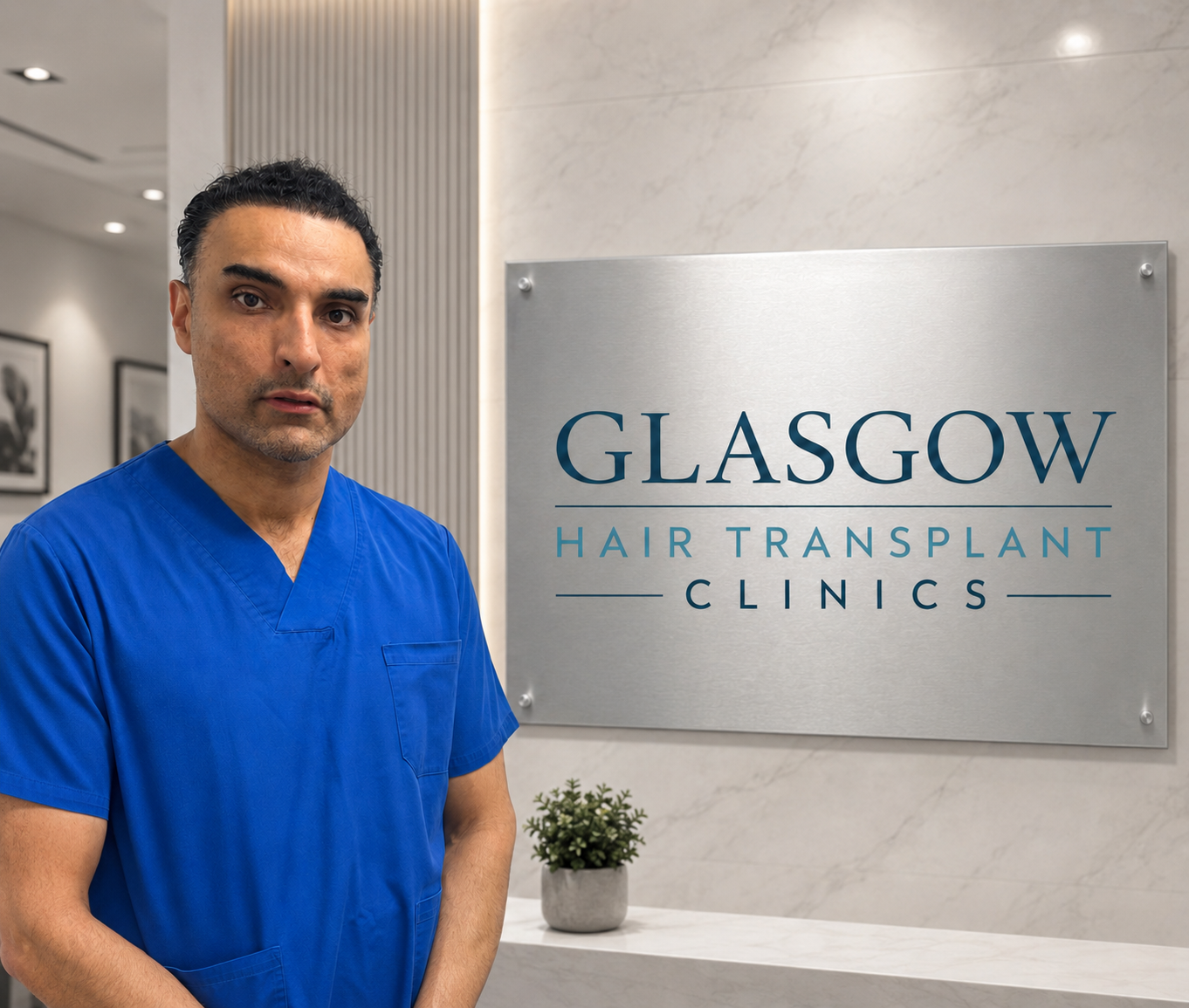
At Glasgow Hair Transplant Clinics, Dr Harpreet Kalra can assess the existing eyebrows, donor hair and the areas where additional density is required. The proposed brow shape is discussed before surgery so that the restoration works with the patient's own facial proportions rather than following a standard eyebrow template.
FUE is used to obtain individual follicular units from the donor area. For eyebrow work, finer single-hair grafts are particularly useful because they allow greater control over the leading edges and the changing direction of the brow.
The same assessment also covers donor-hair texture, expected growth, aftercare and the fact that transplanted scalp hairs normally need regular trimming once they are growing in the eyebrow.
Dr Kalra is registered with the General Medical Council under reference 7126076.
Glasgow Google reviews
Considering an Eyebrow Transplant in Glasgow?
Book a consultation with our Glasgow clinic to discuss the areas of your eyebrows you want to restore, your existing brow shape, donor-hair characteristics and the number of grafts required.
Book a Free Consultation